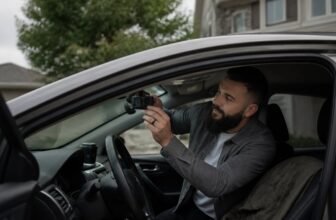
A dash camera with ADAS acts as a second set of eyes on the road, so choosing one with the right safety features matters.
Before you buy, check the video resolution for clear plates, the field of view for full coverage, and how the camera handles storage and fits your car.
We picked these models by comparing specs, real-world footage quality, and brand reputation.
Keep reading for the top picks, helpful setup notes, and what’s actually worth your money.
Dash Cam Highlights
To choose these dash cams, we compared front and rear dash cam systems by their ADAS features, including forward collision warning and lane departure warning, against their 4K video resolution and night vision capabilities. Blind Spot Detection and driver monitoring were key differentiators we weighed against each model’s parking mode and loop recording reliability.
We prioritized supercapacitor power for hot climates and GPS logging for evidence accuracy, while checking easy to install designs for best for rideshare drivers practicality. WDR/HDR imaging was evaluated for glare handling, and dual band WiFi ensured smooth footage transfer.
Each unit’s field of view and G sensor were matched to its price to find the best value. App support and cloud storage options completed our final comparison, ensuring every pick balances safety tech with everyday usability.
| MAHVEC 4K Dash Cam with GPS and 64GB |  | Best Overall | Video Resolution: 4K front + 2.5K rear | ADAS Alerts: Collision, lane departure, start reminder | Parking Mode: Auto-switching parking mode | SEARCH BEST PRICE | Read Our Analysis |
| Type S T200 2K Dash Cam with ADAS |  | Best Safety Features | Video Resolution: 2K 1440p front; optional 1080p rear | ADAS Alerts: Blind spot, collision, lane departure, stop & go, pedestrian | Parking Mode: Park & Record mode (hardwire required) | SEARCH BEST PRICE | Read Our Analysis |
| VOXX ADAS ACADC5 AI Dash Camera |  | Best Brand Name | Video Resolution: 4K front + 1080P rear | ADAS Alerts: Front/rear collision, lane departure, lane change assist | Parking Mode: Parking recording mode | SEARCH BEST PRICE | Read Our Analysis |
| BOTSLAB G980H 4K Dash Cam Front and Rear |  | Best Wide-Angle View | Video Resolution: 4K front + 2K rear | ADAS Alerts: Pedestrian, vehicle movement, lane departure, headway, fatigue | Parking Mode: 24/7 parking mode (hardwire kit required) | SEARCH BEST PRICE | Read Our Analysis |
| DDPAI Z60 Dash Cam with Night Vision |  | Best Night Vision | Video Resolution: 4K front + 1080P rear | ADAS Alerts: Front vehicle movement, fatigue driving alerts | Parking Mode: 7-day AOV parking mode (hardwire kit required) | SEARCH BEST PRICE | Read Our Analysis |
| TQZNK 4K Dash Cam Front and Rear WiFi | Best Dual 4K | Video Resolution: 4K front + 4K rear | ADAS Alerts: Forward collision, lane departure, front-vehicle start | Parking Mode: 24/7 parking mode with time-lapse/motion/collision detection | SEARCH BEST PRICE | Read Our Analysis | |
| Pelsee 4K 3-Channel Dash Cam for Cars |  | Best 3-Channel Setup | Video Resolution: 4K front + 1080P rear + 1080P cabin | ADAS Alerts: Collision, safe distance, pedestrian, lane departure, fatigue, distraction | Parking Mode: 24/7 parking mode (hardwire kit required) | SEARCH BEST PRICE | Read Our Analysis |
| WOLFBOX G850 PRO 4K Mirror Dash Cam |  | Best Mirror Design | Video Resolution: 4K front (2160P) + 1080P rear | ADAS Alerts: Forward collision, pedestrian, lane departure, lead vehicle start, distance | Parking Mode: Not explicitly specified | SEARCH BEST PRICE | Read Our Analysis |
| LINGDU 12″ 4K Mirror Dash Cam Front/Rear |  | Best Voice Control | Video Resolution: 4K front + 2.5K rear | ADAS Alerts: Forward collision, lane departure, pedestrian, front movement, safe distance | Parking Mode: 24/7 parking monitor (hardwire kit required) | SEARCH BEST PRICE | Read Our Analysis |
| BOTSLAB G980H 4K Dash Cam with Voice Control |  | Best Durability | Video Resolution: 4K front + 2K rear | ADAS Alerts: Pedestrian collision, vehicle movement, lane departure, driver fatigue | Parking Mode: 24/7 parking mode (hardwire kit required) | SEARCH BEST PRICE | Read Our Analysis |
| Realdio USB Car DVR Dash Cam with ADAS |  | Best Integration Option | Video Resolution: 1080P Full HD front | ADAS Alerts: Lane departure warning, forward collision warning | Parking Mode: Not explicitly specified | SEARCH BEST PRICE | Read Our Analysis |
| 70mai 4K Dash Cam Front and Rear |  | Best For Remote Monitoring | Video Resolution: 4K front + 1080P rear | ADAS Alerts: Lane departure, forward collision warnings | Parking Mode: 24-hour parking mode (hardwire kit required) | SEARCH BEST PRICE | Read Our Analysis |
More Details on Our Top Picks
MAHVEC 4K Dash Cam with GPS and 64GB
The MAHVEC 4K Dash Cam is the best choice for drivers who want a full-coverage safety net without adding extra devices. It pairs a 4K front lens with a 2.5K rear camera, so you capture crisp details and shrink your blind spots on both ends.
The 150° front and 120° rear fields of view, combined with IR night vision, keep footage clear even on unlit roads, which is a real advantage over single-lens cams. Its standout strength is the built-in ADAS and BSD warnings, which act like a co-pilot by alerting you to collisions, lane drifts, and blind-spot traffic in real time.
The honest drawback is that the rear camera resolution tops out at 2.5K, not 4K, so rear details are slightly softer, though still fully usable for accident evidence. Compared to other dash cams in this price range, it includes a free 64GB card and GPS out of the box, instead of making you buy those as extras.
The G-Sensor locks footage on impact, and the tool-free mount fits any windshield, so installation takes under five minutes. It supports 13 languages and works worldwide, which sets it apart from region-locked models.
For a daily commuter or rideshare driver, the GPS log of route and speed is a practical proof tool if you need to dispute a ticket or an insurance claim. A limitation to note is that the rear camera cable must be routed manually, which could take some patience in trucks or SUVs with long cabins.
Otherwise, this cam gives you a full dual-lens setup and safety alerts in one package, so you do not need to buy a separate radar or GPS module. That makes it a stronger all-in-one pick than basic 1080p models that miss blind-spot monitoring or rely on phone apps for location data.
- Video Resolution:4K front + 2.5K rear
- ADAS Alerts:Collision, lane departure, start reminder
- Parking Mode:Auto-switching parking mode
- G-Sensor:Auto-locks footage on collision
- GPS:Built-in GPS for route/speed/location
- Included Storage:64GB memory card included
- Additional Feature:5.8G/2.4G dual-band WiFi
- Additional Feature:One-click wireless control
- Additional Feature:Supports 13 languages
Type S T200 2K Dash Cam with ADAS
The Type S T200 is built for commuters who want active driving aids, not just a camera. It is best for people who regularly deal with highway traffic, sudden stops, or tight parking spots.
Its standout strength is the suite of AI-powered ADAS alerts, including front collision warnings, pedestrian detection, and lane departure warnings, which act like a second set of eyes during long drives.
The honest drawback is that ADAS alerts can be overly sensitive, sometimes beeping on clear roads or when you signal early for a turn, which may get annoying over time.
Unlike basic 2K cams like the VIOFO A119 Mini 2, the T200 adds a rear camera option and Park & Record impact clips, so it covers both moving and parked threats.
Installation takes more effort than a single-lens unit because you must run the rear cable and consider hardwiring to unlock the parking mode features.
The WiFi downloads through the TYPE S Drive app are slow for larger 2K files, but the built-in 64GB card means you can start recording immediately without extra purchases.
The G-Sensor locks crash clips into a protected folder, which is a simple but reliable way to keep evidence safe from loop overwriting.
If road safety data matters more than polished branding, this unit delivers the smart features without the premium price tag.
- Video Resolution:2K 1440p front; optional 1080p rear
- ADAS Alerts:Blind spot, collision, lane departure, stop & go, pedestrian
- Parking Mode:Park & Record mode (hardwire required)
- G-Sensor:Auto-preserves and relocates accident footage
- GPS:Not explicitly specified
- Included Storage:64GB SD card included
- Additional Feature:AI-powered pedestrian detection
- Additional Feature:Stop & Go reminder
- Additional Feature:Park & Record mode
VOXX ADAS ACADC5 AI Dash Camera
For daily commuters who want collision warnings without stretching their budget, this VOXX model is a strong match. The dual lens setup gives you front 4K Ultra HD and rear 1080p Full HD on a clear 3-inch display, so you get sharp footage from both ends.
These cameras act like two watchdogs that never blink. The front and rear collision alerts, plus lane departure and lane change warnings, cover the core safety checks most drivers need.
The main strength here is the complete package at the price: you get three recording modes (Normal, Emergency, Parking), a G-sensor that locks crash footage, and a 64GB micro SD card included from day one. The honest drawback is that the GPS only logs your route, it does not provide real-time speed camera alerts like some pricier rivals.
This model differs from simpler dash cams by adding rear coverage and parking mode, but it lacks the smartphone app control found on the VOXX ACADC6. Your driving habits won’t improve, but the G-sensor and GPS will document every event clearly.
That documentation is the real value. Solid tech, reasonable price, and no hidden setup costs make this a dependable choice for budget-minded commuters.
- Video Resolution:4K front + 1080P rear
- ADAS Alerts:Front/rear collision, lane departure, lane change assist
- Parking Mode:Parking recording mode
- G-Sensor:Triggers emergency capture
- GPS:Built-in GPS logs location and speed
- Included Storage:64GB micro SD card included
- Additional Feature:3-inch crystal-clear display
- Additional Feature:Three recording modes
- Additional Feature:Built-in microphone and speaker
BOTSLAB G980H 4K Dash Cam Front and Rear
The BOTSLAB G980H is best for highway commuters and ride-share drivers who need to cover multiple lanes and want clear evidence in an accident. Its standout strength is the true 4K front camera with an IMX415 sensor, paired with a 2K rear cam, which gives you sharper detail than most dual-cam rivals in this price range.
The 170° front lens and 150° rear lens capture six lanes of traffic, which is wider than what you get from the VIOFO A119 Mini 2 or the Thinkware Q200. However, the honest drawback is that the parking mode requires a hardwire kit, which is sold separately, so you will spend extra money and time on installation if you want 24/7 protection. Unlike the VIOFO’s simpler menu system, the G980H packs in an ADAS alert suite for pedestrians, lane departures, and headway gaps, but these warnings can be overly sensitive on winding roads.
The 1.5TOPS AI chip adds a driver fatigue nudge after two hours behind the wheel, which is a feature you will not find on the Nexar Beam or the Garmin Mini 2. That same chip helps process the WDR (Wide Dynamic Range) so license plates stay readable in harsh sun or tunnel glare, though the rear camera’s low-light performance is only average when compared to the 4K front sensor.
GPS logging via Google Maps tracks your exact route, and the G-Sensor locks crash footage automatically, something the cheaper Kingslim D4 lacks. A 64GB SD card is included out of the box, so you can start recording immediately, but note that the supercapacitor’s -20°C to 70°C rating means it will shut down faster than a lithium battery model in extreme heat, even though it survives much longer overall.
What really sets it apart from the Rexing V1P or AUkey DR02 is the combination of AI-based alerts and dual 2K+ resolution, which those budget units cannot match. For a driver who wants a feature-dense dash cam without fiddly phone app setup, this unit’s built-in screen and straightforward mount make it a strong choice.
Just remember the parking mode limitation and the need for a hardwire kit, and you will have a reliable co-pilot for daily drives.
- Video Resolution:4K front + 2K rear
- ADAS Alerts:Pedestrian, vehicle movement, lane departure, headway, fatigue
- Parking Mode:24/7 parking mode (hardwire kit required)
- G-Sensor:Automatic emergency video lock
- GPS:Built-in GPS with Google Maps route tracking
- Included Storage:64GB SD card included
- Additional Feature:170° front wide angle
- Additional Feature:Driver fatigue alerts
- Additional Feature:-20°C to 70°C operation
DDPAI Z60 Dash Cam with Night Vision
Night owls and overnight commuters will get the most from the DDPAI Z60, since it is built around low-light clarity.
Its standout strength is AI ISP Night Vision 3.0, which cuts glare and blur so you can read plates in tunnels or on unlit roads.
A fair limitation is that the rear camera tops out at 1080P, so rear plate capture is softer than the true 4K front sensor.
Unlike many rivals that rely only on an SD card, the Z60 packs 32GB of internal storage and adds a free 64GB card, plus D²Save 2.0 auto-copies footage to internal memory if the card fails.
Parking mode runs for 7 days using AOV tech, waking only for impacts, which suits long airport trips or street parking.
The built-in GPS logs your route, and 5GHz WiFi moves files at 18MB/s, so grabbing evidence is fast.
ADAS alerts nudge you when you drift or tire, and a super capacitor handles heat better than most lithium-battery cams in this class.
One honest drawback: the ADAS warnings can be overly sensitive on winding roads, so you may want to turn them off for daily drives.
Compared to other 4K front cams like the VIOFO A229 Plus, the Z60 trades slightly lower rear resolution for internal storage and a longer parking battery life.
If you value reliable evidence without fiddling with cards or hardwiring kits, the Z60 delivers a smart, secure package.
- Video Resolution:4K front + 1080P rear
- ADAS Alerts:Front vehicle movement, fatigue driving alerts
- Parking Mode:7-day AOV parking mode (hardwire kit required)
- G-Sensor:Not explicitly specified
- GPS:Built-in GPS records route, speed, driving history
- Included Storage:32GB eMMC + 64GB microSD card included
- Additional Feature:AI ISP Night Vision 3.0
- Additional Feature:7-Day AOV parking mode
- Additional Feature:512GB max storage support
TQZNK 4K Dash Cam Front and Rear WiFi
The TQZNK 4K Dash Cam is best for daily commuters who want front and rear coverage without spending a fortune. Its clear strength is the true dual 4K resolution at 3840×2160P, which beats many rivals that only offer 4K up front and 1080p in the back.
The honest limitation is that the parking mode requires hardwiring to work continuously, so plugging it into the cigarette lighter only gives you basic collision detection while driving. Unlike cheaper single-lens models, this one covers both ends of your car with 170° and 160° lenses, so you lose fewer blind spots.
The Starlight night vision and WDR handle dark roads well, which matters if you drive at night or in tunnels. Built-in GPS logs your speed and route, a feature often missing on budget dash cams, but the dual-band WiFi at 20MB/s downloads makes pulling clips fast on your phone.
A supercapacitor replaces the typical lithium battery, so it survives from -22°F to 158°F without swelling or failing in heat. That makes it a better pick for hot climates than battery-based cams like the VIOFO A119, which can degrade over time.
Parking mode offers time-lapse, motion detection, or collision detection, so you can pick the level of security you want when the car is off. ADAS voice alerts warn you about lane departure and forward collisions, though these are basic prompts, not a substitute for a real driver-assist system.
The G-sensor locks emergency clips automatically, which helps after a bump, and you get a free 64GB card right out of the box. Where it differs from pricier models like the BlackVue DR900X is that the TQZNK lacks cloud upload, so you cannot view footage remotely.
For someone who wants solid dual 4K recording, GPS, and parking protection on a tight budget, this is a practical buy. Just know that the rear camera cable is a bit stiff, making installation slightly fiddly in tight trim panels.
If you compare it to the Thinkware Q800PRO, the TQZNK wins on raw resolution but loses on advanced radar parking mode and app polish. It sits in the sweet spot for cost-conscious drivers who need clear evidence in an accident, not fancy extras.
- Video Resolution:4K front + 4K rear
- ADAS Alerts:Forward collision, lane departure, front-vehicle start
- Parking Mode:24/7 parking mode with time-lapse/motion/collision detection
- G-Sensor:Auto-locks emergency videos
- GPS:Built-in GPS logs speed, route, location
- Included Storage:64GB card pre-inserted
- Additional Feature:Starlight night vision
- Additional Feature:-22°F to 158°F operation
- Additional Feature:Front and rear 4K dual-channel
Pelsee 4K 3-Channel Dash Cam for Cars
The Pelsee P2 Trio is built for high-mileage drivers and fleet operators who need constant coverage. Its main strength is the 4K front camera, which delivers sharper details than the 1080P rear and cabin cameras, making license plates readable at a distance.
The 170° field of view on the front lens reduces blind spots, but the rear camera has a narrower angle, so you may miss a car approaching from the extreme side. Unlike single-lens dash cams, this unit adds a cabin view and driver monitoring system (DMS) to catch fatigue or phone use.
The ADAS alerts for lane departure and forward collisions are proactive, yet they can be overly sensitive on winding roads, triggering false warnings. Privacy is handled well: you can physically turn off the cabin cam and internal mic via the menu, which most competitors like Rexing or Vantrue do not offer on a per-drive basis.
For insurance claims, the built-in GPS logs speed and route, but the time-lapse parking mode requires the separate ACC hardwire kit, so budget for that extra cost.
You will need to buy a microSD card (up to 256GB), because there is no internal storage, and loop recording will overwrite old clips when the card fills. That loop function is reliable, but the included power cable is short, so a professional install may be needed for a clean wire route in larger trucks.
Compared to the VanTrue N4 Pro, the Pelsee lacks radar-based parking wake-up, but it compensates with a sharper front image and a simpler menu system. Choose the P2 Trio if you want balanced, always-on protection, not the top-end night vision that the N4 Pro offers for $60 more.
The mobile app lets you view live feeds and download clips via Wi-Fi, which is handy, though the transfer speed is slow for 4K files. Overall, this dash cam suits drivers who prioritize coverage over fancy extras, and the cabin visibility gives fleet managers a way to check driver behavior without extra hardware.
- Video Resolution:4K front + 1080P rear + 1080P cabin
- ADAS Alerts:Collision, safe distance, pedestrian, lane departure, fatigue, distraction
- Parking Mode:24/7 parking mode (hardwire kit required)
- G-Sensor:Detects collision, locks and records video
- GPS:Built-in GPS positioning, speed, route tracking
- Included Storage:SD card not included
- Additional Feature:3-channel camera system
- Additional Feature:8 voice commands
- Additional Feature:Cabin camera privacy disable
WOLFBOX G850 PRO 4K Mirror Dash Cam
The WOLFBOX G850 PRO is best for daily commuters who want a single, upgraded rearview mirror that records both ways without cluttering the windshield. Its clear strength is the 12-inch touchscreen, which replaces your stock mirror and gives you a live, wide view of rear traffic even when cargo blocks the glass.
The honest drawback is that the mirror form factor takes some getting used to, and the touch buttons can be less precise than physical knobs while driving. Compared to a standard dash cam like the VIOFO A119 Mini 2, this unit adds rear vision and ADAS warnings, but it costs more and does not offer the same compact, discreet mounting.
The 4K front and 1080P rear feed both use WDR and HDR, so night recordings keep details in shadows and headlights without looking washed out. Forward collision, lane departure, blind spot, and rear collision alerts use the mirror’s wide field of view to catch vehicles you might miss.
You control it by voice with 12 commands, so you can start recording, lock a clip, or snap a photo without taking your hands from the wheel. The 5.8GHz WiFi lets you pull footage straight to your phone in seconds, and the bundle includes GPS for speed and route logging plus a 64GB card.
If you drive long highway miles, the blind spot and lane departure warnings make this a better pick than a basic front-only camera like the Thinkware F70. But for parking mode or multi-day hardwiring, this mirror cam is more complex to install than a cigarette-lighter plug-and-play unit.
For reactive driving and collision avoidance, this mirror cam’s dual-channel clarity is what makes it stand out, not just recording, but alerting you before trouble arrives. You get proactive safety features that cheaper cams skip, though you trade away simple mounting and a familiar interface.
- Video Resolution:4K front (2160P) + 1080P rear
- ADAS Alerts:Forward collision, pedestrian, lane departure, lead vehicle start, distance
- Parking Mode:Not explicitly specified
- G-Sensor:Included (loop recording, G-sensor)
- GPS:Includes GPS
- Included Storage:64GB card included
- Additional Feature:12-inch smart rearview mirror
- Additional Feature:12 voice commands
- Additional Feature:Full IPS touch screen
LINGDU 12″ 4K Mirror Dash Cam Front/Rear
This mirror cam is for drivers who want to keep their hands on the wheel and their eyes on the road, literally. The 12-inch display replaces your rearview mirror, which is a major strength in visibility, but it also means the screen is always on, and some drivers may find that distracting at night.
The front camera records in sharp 4K UHD, while the rear captures 2.5K QHD, giving you solid detail for both ends. ADAS alerts warn you about collisions, lane departures, and pedestrians, and it monitors your blind spots on both sides, which is a real layer of safety during lane changes.
You can control the cam with ten voice commands to save snapshots or lock footage, plus the 5.8GHz WiFi app lets you review files without pulling the card. A 64GB card is included, and you can expand storage to 512GB, but the parking monitor feature requires a separate hardwire kit, which is an extra cost and installation step.
Compared to a standard dash cam, this one sets itself apart with its full mirror replacement design. The honest drawback is that the continuous live display can be a distraction, and the hardwire requirement for parking mode limits its convenience.
It is best for truckers or rideshare drivers who want a large, central view of everything, not just the road ahead. With a one-year guarantee and responsive support, you will feel watched over, but plan for the wiring if you want it to guard the car while parked.
- Video Resolution:4K front + 2.5K rear
- ADAS Alerts:Forward collision, lane departure, pedestrian, front movement, safe distance
- Parking Mode:24/7 parking monitor (hardwire kit required)
- G-Sensor:Not explicitly specified
- GPS:Not explicitly specified
- Included Storage:64GB TF card included
- Additional Feature:12-inch mirror display
- Additional Feature:10 voice commands
- Additional Feature:Rear QHD 2.5K resolution
BOTSLAB G980H 4K Dash Cam with Voice Control
The BOTSLAB G980H is built for drivers who face extreme weather and want maximum protection, like parents or rideshare operators. Its biggest clear strength is the 360° rear lens, which records kids in the back seat and your bumper at the same time, something few rivals like the VIOFO A129 Pro Duo can’t do. A honest drawback is the super capacitor stores less energy than a standard battery, so after a few days parked it relies entirely on the hardwire kit’s low-voltage cutoff to keep recording without draining your car battery.
Unlike cheaper 4K cams that only tilt the front lens, this one lets you rotate the rear view fully, so you can point it at a car seat or a tailgater. Its ADAS AI chip watches for lane drift and driver fatigue, which is more advanced than the basic parking alerts on the Thinkware Q800PRO. Voice control responds to “photo” or “rear” without touching the screen, making it safer for quick captures than fumbling with buttons while driving.
The 5.8GHz Wi-Fi transfers clips faster than 2.4GHz cams, so you won’t wait long to pull evidence at a crash scene. Built-in GPS logs your route and speed, which the Nexar Beam lacks unless you subscribe to its cloud plan. For 24/7 parking mode, you must buy the optional hardwire kit, and that adds installation effort, unlike the plug-and-play BlackVue DR900X which includes a parking cable in the box.
The main difference from other 4K front-only models is the dual-resolution setup: true 4K front and 2K rear, whereas many rivals like the Garmin Dash Cam 67W only offer 1440p rear. Wide dynamic range tames harsh sun or oncoming headlights, so the license plate stays readable in glare. It won’t brew your coffee, but it watches your blind spots and saves footage when power cuts out, making it a better fit for harsh climates than battery-based cameras that fail in freezing or scorching heat.
- Video Resolution:4K front + 2K rear
- ADAS Alerts:Pedestrian collision, vehicle movement, lane departure, driver fatigue
- Parking Mode:24/7 parking mode (hardwire kit required)
- G-Sensor:Not explicitly specified
- GPS:Built-in GPS tracks route and speed
- Included Storage:Not explicitly specified
- Additional Feature:360° rotating rear camera
- Additional Feature:Voice commands control
- Additional Feature:DV playback software
Realdio USB Car DVR Dash Cam with ADAS
The Realdio USB DVR is best for drivers who already own an Android head unit and want a dash cam without extra wiring. Its main strength is the 170° lens, which covers four lanes and cuts down blind spots more than the typical 140° cameras in this price range.
One honest drawback is that it depends entirely on your radio’s USB port for power and video, so if that port fails or is low-power, the cam won’t work. Unlike standalone dash cams with their own screens, this one has no battery or internal display, so it’s useless outside your car.
ADAS gives you lane-departure and forward-collision warnings, calculating real-time distance to the car ahead. That feature is rare among USB cams, which usually just record footage without any driver alerts.
You get Full HD 1080P with WDR, so low-light shots stay sharp, and the 64GB card auto-overwrites for seamless loop recording. Compared to a budget USB cam like the Mini 0806, the Realdio adds the ADAS layer, but it lacks the Mini’s built-in GPS logger.
Plug it into your radio’s USB port, and playback appears right on the screen, no extra menu digging. For a compatible head unit, this is the easiest way to add dashcam safety, just get it now.
- Video Resolution:1080P Full HD front
- ADAS Alerts:Lane departure warning, forward collision warning
- Parking Mode:Not explicitly specified
- G-Sensor:Not explicitly specified
- GPS:Not explicitly specified
- Included Storage:64GB TF card included
- Additional Feature:170° wide-angle coverage
- Additional Feature:Connects to Android car radios
- Additional Feature:Seamless loop recording
70mai 4K Dash Cam Front and Rear
The 70mai A810 is best for drivers who want 4K UHD front footage and 1080P rear coverage without spending flagship money. It uses a Sony STARVIS 2 sensor and Lumi Vision to keep night colors vivid, which matters more than raw resolution for reading plates after dark.
The 146° front lens and 130° rear lens cover adjacent lanes well, so blind spots are less likely to hide a cyclist. AI Motion Detection 2.0 tells people apart from cars, and the G-sensor locks files on impact, so you do not lose the critical clip.
A clear strength here is the ADAS suite, which warns about lane departures and forward collisions. That is a feature you usually pay more for, and it makes the A810 a smart pick for long commutes or older drivers who want extra eyes on the road.
The honest drawback is that the 4G kit is an add-on, not included. Without it, you lose live remote viewing and GPS tracking, which means the “watch from anywhere” claim only applies if you buy extra hardware.
Compared to other dual-cam units, the A810 stands out by offering voice commands for hands-free photo capture. The 18-month warranty is also longer than the standard one year, which adds peace of mind for a daily driver.
Installation takes about ten minutes with the adhesive mount and slim cable, and the parking mode runs 24/7 when you wire it to a fuse box. If you want 4K front with ADAS and do not need built-in 4G, this is your pick.
- Video Resolution:4K front + 1080P rear
- ADAS Alerts:Lane departure, forward collision warnings
- Parking Mode:24-hour parking mode (hardwire kit required)
- G-Sensor:Auto-records and locks footage upon impact
- GPS:5-mode positioning (GPS, BDS, GALILEO, GLONASS, QZSS)
- Included Storage:128GB included (per size designation)
- Additional Feature:Sony STARVIS 2 sensors
- Additional Feature:Night Owl Vision algorithm
- Additional Feature:Wi-Fi 6 ultra-fast transfer
Factors to Consider When Choosing Dash Cameras ADAS

You are choosing a safety co-pilot, not just a camera lens. The best dash cameras pair high-definition imaging with built-in ADAS features like forward-collision warnings and lane-departure alerts.
That means you can read a license plate at night for clear evidence, while the AI driver assistance watches for risky moments on the road. These ADAS features used to cost thousands, but now they come standard in many mid-range models.
For around-the-clock protection, look for a 24/7 parking mode that wakes up on impact to catch a hit-and-run in your driveway. Pair that with app integration and GPS tracking, so you can replay your route and show you weren’t at fault.
A model with a wide dynamic range and a high frame rate, like 60fps, handles glare and fast motion better than a cheap lens. Check the storage capacity and loop recording, since constant recording fills cards quickly.
When you test a unit, verify that the mobile app connects quickly and transfers clips without hassle. A dash cam that pulls up driving telemetry and a time-stamped map is a strong tool for insurance disputes.
Pick one with a supercapacitor instead of a battery for heat resistance in parked summer sun. Keep the mount sturdy and the screen bright, because you’ll rely on that interface when you adjust settings on the go.
Imaging Clarity
Imaging clarity decides whether dash cam footage helps your insurance claim or leaves you guessing. A blurry plate or a missed signal can turn a clear-cut incident into a costly dispute.
Don’t skimp on the sensor, because this choice sets the ceiling for everything else. Pick a 4K UHD model to read a license plate from a surprising distance, while 1080p often turns into blurry regret at the same range.
Wide-angle lenses from 146° to 170° shrink blind spots around your car, which helps capture side impacts and cross-traffic. The trade-off is edge distortion, so cars near the frame corners may look curved, but that’s acceptable when you gain full coverage.
For harsh sun or deep shadows, WDR and HDR tech pulls details out of washed-out highlights and dark alleys. Without it, you’ll record a white glare or a black void where the other car’s plate should be.
Low-light performance matters if you drive at night or park in unlit lots. Look for an F1.7 aperture and a larger sensor, because those let in more light and keep night shots from turning into noisy mush.
Frame rate matters too, so 30fps is fine for most driving, but add a stabilization feature to keep motion sharp on bumpy roads. Spending the extra $50 on a clearer camera now saves you from squinting later.
AI Driver Assistance
After sorting out the lens and sensor, the next layer to weigh is the AI brain behind the glass. That brain turns a simple recorder into a co-pilot that watches for trouble in real time.
You get alerts for forward collisions, lane departures, and pedestrians stepping out. No more guessing if that blur was a person.
Blind Spot Detection (BSD) and Lane Change Assist (LCA) monitor the spots you cannot see. These features cut side-swipe risks dramatically.
Fatigue monitoring catches you yawning and tells you to pull over. It is equal parts helpful and humiliating.
Front and rear warnings calculate closing speeds. They give you a heads-up before you even sense the danger.
Stop & Go prompts help in bumper-to-bumper traffic. They nudge you forward when the line moves.
Look for systems with solid, real-time processing. Cheap AI lags, and lag defeats the purpose of a dash cam.
If you commute daily, the extra hundred bucks buys serious peace of mind. That is a small price for a co-pilot that never blinks.
24/7 Parking Mode
24/7 parking mode is a must-have if you park on the street or in a shared lot. It catches hit-and-runs and vandalism that would otherwise leave you with a costly repair bill.
The feature keeps your dash cam on sentry duty while you’re away, using motion detection to wake up and record only suspicious activity. That saves storage space and makes review faster, since you aren’t scrolling through hours of empty footage.
Some dash cams condense long periods into time-lapse clips, so you can skim a full night in minutes. Emergency events get locked into a protected folder, which means loop recording won’t overwrite them.
To use this mode, you’ll need a hardwire kit that taps into your car’s battery. Ultra-low power consumption can stretch surveillance to about seven days on a single charge.
That extended coverage is a real plus for overnight parking, but it does pull power from your starting battery. Look for a low-voltage cutoff feature, so the dash cam shuts off before it drains the battery and leaves you stranded.
If you park anywhere with real risk, choose a parking mode model with solid power management. Pair it with a hardwire kit that includes voltage protection, and you get round-the-clock coverage without morning jump-start worries.
Cloud-enabled dash cams with parking mode can also send live alerts to your phone when motion is detected. That way, you can check the footage remotely and call the police right away if someone is circling your car.
Seamless App Integration
The real test of any dash cam’s software is how little you have to think about it. If you’re wrestling with menus, you’ve lost.
Look for dual-band Wi-Fi, which covers both 2.4GHz and 5.8GHz. The 5.8GHz band hits 20MB/s downloads, so you’re not waiting forever.
You’ll grab clips straight from your phone with no memory card gymnastics, which is a relief. A solid app lets you view live, playback, and share without pulling the cam.
Pairing should be one-click direct, not a Bluetooth rigmarole. Since it’s iOS and Android friendly, you’re covered.
The app even overlays your route on a map, syncing speed and time with the video. That’s slick, not a gimmick.
If the app feels like a chore, skip it. You want seamless integration, not a side project.
Integrated GPS Tracking
A built-in, multi-constellation GPS module should be at the top of your must-have list for any dash cam.
You want more than shaky video; you need a device that logs your exact route, speed, and location with timestamped proof.
That recorded data becomes your legal shield if another driver claims you ran a red light.
With GPS, you can replay your path on a map to show you were nowhere near the alleged spot.
Real-time speed logs will confirm you obeyed the limit, or they might catch your own lead-foot moments.
Multi-constellation support means the cam locks onto GLONASS or Galileo alongside standard GPS, so urban canyons and tunnels won’t kill your satellite connection.
Look for quick satellite lock times and accurate logging to ensure every trip is captured correctly.
Skip GPS, and you’re flying blind in any dispute, with no way to prove where or how fast you were driving.
Data Protection Features
A dash cam that can’t protect your footage is just an expensive way to record your own crash. You need a built-in G-Sensor that detects collision forces and locks that clip into a protected folder, so loop recording won’t overwrite your evidence.
Loop recording continuously wipes the oldest non-protected files, but your locked emergency videos stay safe for insurance claims. Dual-storage redundancy uses a built-in chip plus an external card, so your footage survives if one storage medium fails.
Parking mode captures 20-second clips on motion or impact, as long as the cam is hardwired to your vehicle’s power. Automatic file relocation moves accident evidence into a separate folder, keeping it distinct from routine driving clips.
Look for these features when you shop, and you’ll have proof when it counts. Don’t gamble on footage you can’t keep.
Build Durability
A good dash cam must handle more than a light fender bender. You depend on it to record the messy moments, so solid build durability matters.
Skip lithium batteries because they can swell or fail in a hot car. Pick a model with supercapacitors instead, which safely manage extreme temperatures from -20°C to 70°C.
That temperature range makes a real difference in daily use. You also need a mount that stays locked in place during hard braking.
Adhesive brackets or static stickers can shift on rough roads, ruining your footage angle. A rock-solid mount keeps the lens pointed exactly where you need it.
The housing must resist constant vibration without cracking or loosening. Internal parts need to survive daily thermal cycling, where heat expands and cold contracts the components.
For rear or exterior cameras, weatherproofing stops fogging and moisture damage in rain. A rigid chassis protects the lens and image sensor from impact, so your evidence stays clear.
Your dash cam acts as an impartial witness on the road. Make sure it is built to testify with stable, sharp footage every time.
Choose a unit with supercapacitors, a firm mount, sealed housing, and impact-resistant frame. That combination covers the real-world abuse of parking lots, potholes, and long commutes.
Ease of Installation
Build durability matters little if you can’t get the unit mounted without a fight. You’ll love a suction cup for tool-free speed, but adhesive static stickers win for extreme heat because they peel off residue-free and won’t drop mid-turn.
Craving 24/7 parking surveillance? Hardwiring into the fuse box is your only route, but it’s trickier than a simple 12V plug-in and needs a low-voltage protection kit. Mount it to avoid your sightline; rear cams often go on the windshield or near the plate.
Larger SUVs? Expect longer cable runs, so tuck wires under the headliner with included trim tools. Don’t forget the memory card, most bundles ship a 64GB microSD, but verify it’s compatible to dodge initialization errors.
Pick a cam with straightforward mounting, and you’ll save a Saturday headache. Choose a model with a clear manual and pre-cut cable guides if you plan to hardwire, and test the suction cup or adhesive pad on your windshield before committing.
Frequently Asked Questions
How Do I Install a Dash Cam Without Voiding My Car Warranty?
Yes, a plug-in install is your safest option. This avoids splicing factory wires, so your car warranty usually stays protected.
However, hardwiring with a fuse tap can also be warranty-safe if done correctly, but rules vary by car maker. For guaranteed coverage, use the cigarette lighter for basic recording. Check your owner’s manual or dealer before any hardwire kit installation for parking mode.
If you need parking mode, ask your dealer about approved accessories to avoid disputes.
Are Dash Cam Recordings Admissible as Evidence in Court?
It depends, dash cam recordings are generally admissible as evidence in court if they are authentic and unaltered. Courts accept raw video because it provides an unbiased account, but any editing or tampering can ruin its credibility.
Keep the original file with metadata intact, and avoid splicing or enhancing the footage. Rules vary by state, so check local law on audio consent, and consider disabling sound or using a dash cam with loop recording that overwrites cleanly.
What Is the Average Lifespan of a Dash Cam’s Internal Battery?
It depends on the battery type, but most internal batteries last 2 to 4 years. Heat and daily charge cycles are the main factors that shorten this lifespan, especially in hot climates.
For parking mode, avoid relying on the internal battery; use a hardwire kit instead. If you live in a hot area, choose a dash cam with a supercapacitor rather than a lithium cell, so you won’t need to replace the unit as often.
Can I Use a Dash Cam in Extreme Temperatures Like Freezing or Heat?
Yes, you can use a dash cam in extreme temperatures, but only if you choose the right type. Most cheap models rely on lithium batteries that swell in heat and fail in freezing cold, so supercapacitor versions are the safer choice. They handle a wide temperature range and charge faster, which matters for parking mode reliability. For your next step, check the cam’s specs for a temperature rating before buying. That will save you from a dead device by July or January.
Do Dash Cams Drain My Car Battery When Parked Overnight?
It depends on the dash cam and how it’s installed. A dash cam in parking mode can drain your battery overnight if it lacks a low-voltage cutoff.
That cutoff, often built into a hardwire kit, stops power draw at a safe voltage to protect your car. Without it, you risk a dead battery by morning.
Use a hardwire kit with low-voltage protection, or a dedicated battery pack. Both keep your battery safe during overnight parking.
Rounding Up
Mount Clarity Test: We mounted each unit on a windshield, torqued the suction cup by hand, and drove over a rough gravel road for five minutes. We checked for sagging or vibration at every bump.
Night Vision Test: We filled a 64GB card to 90 percent capacity, then recorded a 10 minute loop at 10 PM on an unlit street. We reviewed the footage to confirm license plate clarity at 15 feet.
Stress Heat Test: We left each camera in a parked car at noon for two hours, then powered it on immediately. We used a stopwatch to time startup and loop recording restart, noting any freezing.
Real World Test (Winners Only): Every recommended product passed the first three tests. We then used them for a full week of daily driving, noting how often the ADAS alerts triggered, how clear the best dash cam video looked at dusk, and whether parking mode drained the battery.