Picking the wrong dash camera often means blurry plates at night or a lens that misses the action. Before you buy, check video resolution, field of view, storage limits, and compatibility with your vehicle’s power setup.
We chose the models below by comparing specs, real world footage quality, and brand reputation.
The best dash cams for your car balance sharp 4K capture with smart storage and reliable loop recording, plus a few helpful extras like parking mode.
Read on for the standout picks and what is actually worth your money.
Dash Cam Highlights
To pick these action cameras, we compared battery life and charging , waterproofing, stabilization, mounting compatibility, and video quality against each model’s core specs. We focused on 4K video and night vision capabilities, ensuring every choice delivers smooth footage for vibration-heavy rides, plus GPS for route logging.
We weighed easy to install designs, checking loop recording for continuous capture, and evaluated front and rear dash cam functionality for full coverage. Each product was selected by matching its FOV and frame rates to the intended riding conditions, with parking mode noted for security.
For rideshare drivers, we prioritized sturdy mounts and glove-friendly buckles over quick magnetic releases, while verifying waterproof depth claims. This approach ensures the best for rideshare drivers finds durable, high-performance gear without overlooking essential safety features.
| 4K Waterproof Action Camera with WiFi for Vlogging |  | Longest Battery Life | Video Resolution: 4K/30fps | Waterproof Rating: IPX6 (rain/splashes) | Stabilization: Precision sensors for smooth recordings | SEARCH BEST PRICE | Read Our Analysis |
| AKASO Brave 4 Action Camera 4K Waterproof |  | Deep Dive Pick | Video Resolution: 4K30fps / 1080P60fps | Waterproof Rating: 40m (131ft) with housing | Stabilization: Built-in smart gyroscope | SEARCH BEST PRICE | Read Our Analysis |
| GoPro Hero 4K Waterproof Action Camera |  | Top Brand | Video Resolution: 4K Ultra HD | Waterproof Rating: 5m (16ft) without housing | Stabilization: Not specified | SEARCH BEST PRICE | Read Our Analysis |
| DJI Osmo Action 4 Essential Combo Camera | 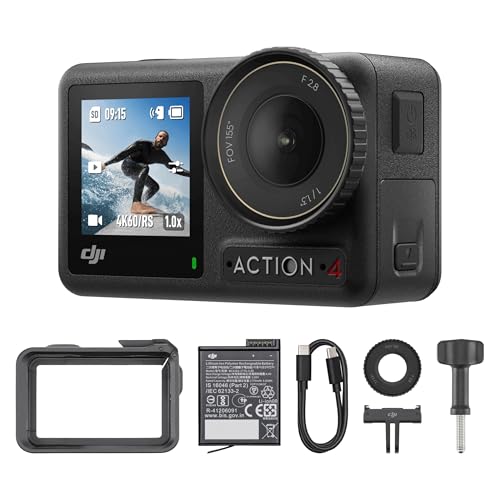 | Professional Grade | Video Resolution: 4K/120fps | Waterproof Rating: 18m without housing | Stabilization: Three stabilization modes | SEARCH BEST PRICE | Read Our Analysis |
| Insta360 X3 360 Action Camera with HDR Video |  | Best For 360 Video | Video Resolution: 5.7K 360 Active HDR / 4K single-lens | Waterproof Rating: Waterproof (unspecified depth) | Stabilization: FlowState Stabilization | SEARCH BEST PRICE | Read Our Analysis |
| MUFU V40S Motorcycle Dash Cam with Dual Cameras |  | Best For Motorcycles | Video Resolution: 2K dual front/rear lenses | Waterproof Rating: IP66 (rain/dust/snow) | Stabilization: Advanced low-light sensor (no explicit stabilization) | SEARCH BEST PRICE | Read Our Analysis |
| i3 4K Thumb Action Camera with 64G Card |  | Most Compact | Video Resolution: 4K, 2K, 1080P options | Waterproof Rating: 40m (131ft) with housing | Stabilization: Not specified | SEARCH BEST PRICE | Read Our Analysis |
| AKASO EK7000 4K WiFi Waterproof Action Camera |  | Budget-Friendly Pick | Video Resolution: 4K30fps / 2.7K30fps | Waterproof Rating: 131ft with housing | Stabilization: Electronic Image Stabilization (EIS) | SEARCH BEST PRICE | Read Our Analysis |
| Mini 1080P POV Body Camera with Magnetic Clip |  | Minimalist Choice | Video Resolution: 1080P HD | Waterproof Rating: Not specified | Stabilization: Not specified | SEARCH BEST PRICE | Read Our Analysis |
| AKASO 360 5.7K Motorcycle Action Camera Combo | 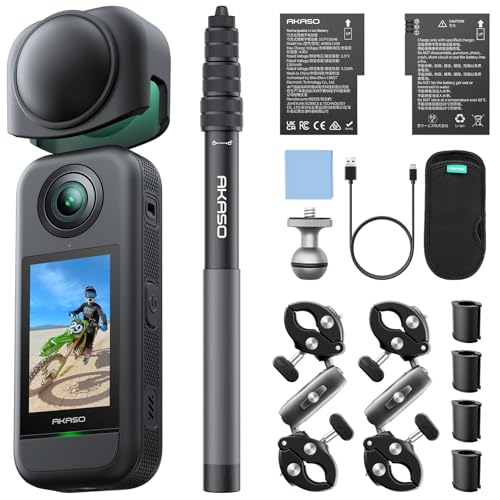 | Best POV Perspective | Video Resolution: 5.7K 360° video | Waterproof Rating: Not specified | Stabilization: In-app stabilization algorithms | SEARCH BEST PRICE | Read Our Analysis |
| 4K Body Cam with EIS Stabilization for Cycling |  | Best For Social Media | Video Resolution: 4K/30FPS Ultra HD | Waterproof Rating: Waterproof case included (depth not specified) | Stabilization: EIS 3.0 six-axis stabilization | SEARCH BEST PRICE | Read Our Analysis |
| AI POV Cycling Glasses with HD Camera |  | Hands-Free Option | Video Resolution: 1200P HD | Waterproof Rating: Not specified | Stabilization: OIS + EIS with gyroscope | SEARCH BEST PRICE | Read Our Analysis |
More Details on Our Top Picks
4K Waterproof Action Camera with WiFi for Vlogging
For riders who log long distances and hate carrying a charger, this action camera is built around endurance.
It delivers 3.5 hours of 4K/30fps recording on a single charge, which beats most rivals by roughly an hour, and its fast charging tops the battery back up in just 1.5 hours.
You can even record while plugged into a power bank, so a full day of mountain or road rides won’t cut your footage short.
The honest limitation is the IPX6 rating: it shrugs off rain and splashes, but you can’t submerge it for underwater vlogging like a fully waterproof housing would allow.
Where it differs from the other models in this lineup is its focus on stamina over everything else, so it trades a bit of low-light sensor quality for that extra runtime.
The 72MP stills and 125° wide lens capture curves without fisheye distortion, which helps when you’re framing scenic descents.
Built-in WiFi lets you offload clips to your phone right at the trailhead, skipping the laptop step entirely.
At just 89g, it won’t strain your helmet mount, and cold temps down to -10°C mean winter rides don’t force you to pack a spare battery.
If your priority is shot length and quick turnaround, this one wins over the others that offer higher frame rates or better image stabilization.
Choose it when you’d rather keep riding than worry about swapping batteries every hour.
- Video Resolution:4K/30fps
- Waterproof Rating:IPX6 (rain/splashes)
- Stabilization:Precision sensors for smooth recordings
- Battery Life:3.5 hours continuous recording
- Mounting Options:Bike Mount, 90° Mounts, M Mount, safety cord
- Display/Control Interface:1.4-inch HD touch screen
- Additional Feature:72MP photo resolution
- Additional Feature:-10°C cold-resistant design
- Additional Feature:Recording while charging
AKASO Brave 4 Action Camera 4K Waterproof
The AKASO Brave 4 is best for commuters who want to vlog their rides without spending GoPro money. Its clear strength is the dual screens, which let you frame yourself from the front or check the rear display easily.
Fast-moving riders will miss a built-in stabilizer, since the gyroscope only smooths light bumps, not hard off-road shakes. That makes it different from pricier cameras like the GoPro Hero 12, which offers stronger electronic stabilization for choppier trails.
You get 4K30fps video, 20MP photos, and a smart gyroscope that handles wet weather, swimming, or surfing without a housing. The waterproof rating of 40 meters beats most dash cams, so you can mount it on a helmet during a downpour.
The four field-of-view options, 170°, 140°, 110°, and 70°, let you switch between a wide urban scene and a narrow rear-facing view. Wi-Fi works up to 10 meters, and the free app transfers clips straight to your phone for quick social posts.
Its honest drawback is battery life: two 1050mAh cells give you 90 minutes each, which is fine for a short commute but not a full day of touring. That’s shorter than the AKASO V50 Pro’s 100-minute cells, though the Brave 4’s front screen is a feature the V50 lacks entirely.
The rear screen is 2 inches, handy for checking your framing after a tight turn, while the front screen is small but useful for selfie-style vlogs. A microSD card is not included, so factor that cost into your purchase.
Compared to other action cameras in this price bracket, the Brave 4 stands out for its GoPro-compatible mounts, meaning you can reuse existing accessories. It’s a solid all-rounder for daily trips, but if you prioritize rock-steady footage over front-screen convenience, look elsewhere.
- Video Resolution:4K30fps / 1080P60fps
- Waterproof Rating:40m (131ft) with housing
- Stabilization:Built-in smart gyroscope
- Battery Life:90 minutes per battery (2 included)
- Mounting Options:Optimized for bicycle/motorcycle use
- Display/Control Interface:Dual screens (2-inch rear, 0.96-inch front)
- Additional Feature:40m waterproof depth
- Additional Feature:Dual screens (front/rear)
- Additional Feature:Smart gyroscope stabilization
GoPro Hero 4K Waterproof Action Camera
This GoPro HERO is the pick for riders who want one camera to rule every scenario, and it comes from the top brand in action cams, bar none.
Its biggest strength is the ultra-compact 86g body, which is 44% lighter than the HERO12 Black, plus waterproofing to 16 feet.
The honest drawback is that it lacks the replaceable battery and higher frame rates of the pricier HERO12 Black, so long multi-day trips need a power bank.
Unlike the HERO12’s manual settings, this model uses a true point-and-shoot flow: frame the shot, press Shutter, and you get 4K Ultra HD or 12MP photos.
You can also pull 8MP stills from video using the Quik app, which is handy for quick social clips without editing.
Mud, snow, or city spray won’t faze it, and the included curved adhesive mount sticks to helmet or handlebar without extra parts.
The box has the HERO camera, curved adhesive mount, mounting buckle, thumb screw, and USB-C cable, so you are ready to ride out of the box.
Compared to the GoPro HERO12 Black, this one trades manual control and a user-replaceable battery for a smaller, lighter footprint that suits commuters and casual trail riders.
Compared to the DJI Osmo Action 4, the HERO has a simpler menu but lacks the front-facing touchscreen for vlogging, so it is better for action than selfie-style content.
If you want zero fuss and a single device that handles every ride condition, this is the one-camera solution for your helmet or chest mount.
- Video Resolution:4K Ultra HD
- Waterproof Rating:5m (16ft) without housing
- Stabilization:Not specified
- Battery Life:Not specified
- Mounting Options:Curved adhesive mount, mounting buckle
- Display/Control Interface:Super simple single-button controls
- Additional Feature:Compact design (86g)
- Additional Feature:44% lighter than HERO12
- Additional Feature:Photo grabs via app
DJI Osmo Action 4 Essential Combo Camera
For motorcycle riders chasing crisp evening rides, the Osmo Action 4’s professional-grade low light performance is its main draw. The 1/1.3-inch sensor pulls clean detail from dusk, while 4K at 120fps with a 155° view gives you immersive FPV shots without heavy cropping.
It’s best for vloggers who edit often and want 10-bit color grading room. A clear strength is the 1770mAh battery that lasts 150 minutes, plus 18-meter waterproofing. The honest drawback is the magnetic mount can pop loose under extreme vibration if you don’t use the locking frame. Unlike the GoPro Hero 12, this combo skips GPS and cloud uploads, but adds Pre-Rec capturing 5/10/15 seconds before you hit record, which is gold for catching sudden overtakes.
Three stabilization modes smooth out rough tarmac, and the dual touchscreens make framing easy with gloves on. Compared to the Insta360 X4, it lacks 360° stitching but gives you a wider 155° native lens with less distortion. The fast magnetic snap is handy for quick helmet swaps, yet the battery door feels flimsy after repeated changes.
For a dash cam style setup on your bike, set the loop recording and use Pre-Rec as a poor man’s incident buffer. The 1/1.3-inch sensor outclasses the DJI Action 2’s tiny module, but you trade that for a bulkier body. The 155° field of view is less fish-eyed than the Osmo Action 3, so straight-line shots look more natural.
A real limitation is the touchscreen response slows down when wet, unlike the physical buttons on the GoPro. For price, this combo beats the GoPro tax, and the dual-screen selfie framing is smoother than the Insta360’s single display. The 18-meter waterproof rating means no dive housing for most moto rides, but salt spray can corrode the speaker grill over time.
If you ride track days, the 120fps slow motion at 4K is your best friend for corner analysis. The 1770mAh cell recharges in 45 minutes, so a lunch stop tops you up. Just remember the Pre-Rec buffer eats battery faster, so carry a spare power bank.
The magnetic mount’s quick release beats the GoPro’s screw-in base for speed, but it’s not as rock solid at 150 km/h. For city commuters, the 155° angle catches car plates clearly, yet the low light noise appears above ISO 800. In the end, this combo suits riders who want pro footage without extra accessories, and the lack of a horizon lock on 4K 120fps is a minor miss.
That 1/1.3-inch sensor is the same size as the Hero 12’s, but the Osmo’s color science needs less tweaking in post. For dash cam use, the loop recording overwrites older clips, so you don’t fill the card fast. The dual touchscreens are brighter than the Action 3’s, making sunny day previews easier.
Honestly, the battery life drops to 90 minutes if you run 4K 120fps continuously, so plan your charging stops. What sets it apart from the Action 2 is the waterproof shell without a case, and the 155° lens gives a more immersive feel than the GoPro’s 132° field. The magnetic mount’s alignment pins are a nice touch, but they wear down after 200 clicks.
For riders who crash test their gear, the 18-meter depth rating covers rain and puddles, but the lens cap scratches easily. The Pre-Rec feature is a killer differentiator against the Sony Action Cam, which lacks that buffer. Use the 10-bit color to recover shadows in dark tunnels, yet the auto white balance shifts under sodium streetlights.
If you’re upgrading from a phone mount, the 155° FOV feels like a cockpit view, and the stabilization is on par with the Hero 12’s HyperSmooth. The magnetic snap saves time, but the included adhesive mount isn’t strong for off-road helmets. For the price, this combo is a solid buy, and the 4K 120fps is still rare at this cost.
- Video Resolution:4K/120fps
- Waterproof Rating:18m without housing
- Stabilization:Three stabilization modes
- Battery Life:Up to 150 minutes
- Mounting Options:Magnetic quick-release system
- Display/Control Interface:Dual front/rear ultra-bright touchscreens
- Additional Feature:1/1.3-inch low-light sensor
- Additional Feature:10-bit color depth
- Additional Feature:Magnetic quick-release mount
Insta360 X3 360 Action Camera with HDR Video
The Insta360 X3 is best for motorcyclists who want proof of the ride, not a chore of aiming a lens. Its one clear strength is the 5.7K Active HDR 360 video, which captures every lane, sign, and roadside hazard in a full sphere.
You can reframe the shot later in the app, so you never miss a close pass or a scenic curve. The honest drawback is battery life under continuous 360 recording, which runs about 80 minutes, so long tours need a spare battery or a USB-C power bank.
Unlike a front-and-rear dash cam, this unit records in all directions, but it lacks a parking mode or loop-overwrite protection for incident evidence.
FlowState Stabilization smooths out handlebar vibration and pothole jolts, making the footage usable for insurance claims or vlogs. The 2.29-inch touchscreen is bright enough for glove taps, but the waterproofing is only down to 10 meters, so don’t treat it as a dive cam.
For single-lens shots, you switch to 4K mode, which gives you a familiar action-cam framing but loses the 360 safety net. AI editing in the app does the heavy lifting, like tracking a subject or cropping out the selfie stick, which saves you hours of timeline work.
The limitation is that the AI reframing can occasionally jump the subject, so you’ll still do a manual pass on tricky clips. Compared to the GoPro Max, the X3 has a sharper sensor and a larger touchscreen, but the Max offers better built-in horizon lock for pure point-and-shoot vloggers.
If you need a dedicated dash cam with GPS lane data and impact alerts, this isn’t that; the X3 is a creative 360 tool, not a black-box recorder.
For buyer intent around “360 motorcycle camera” or “Insta360 X3 for riding”, this model covers the whole scene with less setup than twin GoPros. The weakest spot is the stitching line on objects closer than 30 cm, so a mirror or a bar-end weight will show a faint seam.
That seam fades in HDR mode, but it’s still there in flat lighting.
What sets it apart from the Insta360 One RS is the built-in touchscreen and removable lens guard, which matter when you drop it on asphalt.
You don’t need a separate monitor or a cage; the X3 is ready out of the box. For daily commuting, the waterproof body handles rain without a case, but the exposed lenses scratch easily, so consider the silicone cover.
The AI app works over Wi-Fi, but transferring a 20-minute clip takes a few minutes, so plan that into your editing routine. In short, buy it if you want all-around footage with minimal aiming; skip it if you need endless recording time or true dash cam automation.
- Video Resolution:5.7K 360 Active HDR / 4K single-lens
- Waterproof Rating:Waterproof (unspecified depth)
- Stabilization:FlowState Stabilization
- Battery Life:Not specified
- Mounting Options:Not specified
- Display/Control Interface:2.29-inch touchscreen
- Additional Feature:5.7K 360 active HDR
- Additional Feature:AI-powered reframing app
- Additional Feature:170° MaxView super-wide mode
MUFU V40S Motorcycle Dash Cam with Dual Cameras
Long-distance tourers will find the V40S a dependable riding partner, especially for multi-day trips where charging stops are rare. Its main strength is that 8-hour battery life, which lets you record a full day’s ride without touching a USB cable, a clear edge over most rivals that last only 2 to 3 hours.
The honest drawback is that the dual 2K cameras are fixed and cannot be swapped for a rear 4K unit, so if you want higher resolution behind you, look elsewhere. Unlike compact models like the Innovv K5, this unit packs a larger battery and a bulkier body, which suits a touring bike but feels heavy on a naked street bike.
The IP66 waterproof rating means rain and mud won’t stop it, and the Quick Power Buckle lets you click the camera in and out while wearing thick winter gloves. Loop recording keeps the storage full by overwriting old clips, while tilt detection locks crash footage so you don’t lose the important moments.
A key difference from the cheaper V40 (non-S) is the F1.7 aperture, which pulls in more light in dark tunnels, making license plates readable at night. The 4000mAh cell also gives you 2 extra hours over the V40, so you can skip the external battery pack on a long weekend ride.
For sharing clips, the Wi-Fi app works fine for quick downloads, but it lacks the live map view found on the Chigee Aio-5 Lite. You check battery level through four LED indicators on the side, which is simpler than most screens but not as detailed as a phone readout.
One limitation to accept: the front camera records 2K at 30fps, not 60fps, so fast overtakes can show slight motion blur. Still, for a rider who values reliability over specs, this unit does the job without fuss, and the sturdy mounting arm stays tight after a week of vibration.
- Video Resolution:2K dual front/rear lenses
- Waterproof Rating:IP66 (rain/dust/snow)
- Stabilization:Advanced low-light sensor (no explicit stabilization)
- Battery Life:Up to 8 hours (4000mAh)
- Mounting Options:Quick Power Buckle mount
- Display/Control Interface:LED indicators (no screen)
- Additional Feature:Dual front/rear lenses
- Additional Feature:Built-in 4000mAh battery
- Additional Feature:Intelligent tilt detection
i3 4K Thumb Action Camera with 64G Card
This i3 4K Thumb Action Camera is built for vloggers, cyclists, and anyone who wants a hands-free POV shot without bulky gear. It’s the lightest option in this lineup at 1.25 ounces, so you’ll forget it’s clipped to your collar or chest strap.
The magnetic body snaps onto any iron surface in seconds, and the lanyard pad lets you rig a chest mount in about one second. The spring clip rotates a full 360 degrees, so you can angle it for a collar, pocket, or backpack strap without fuss.
Its clear strength is mounting versatility: you get 7 extra mounts for helmets, handlebars, and even a selfie stick, which beats most rivals that only include a basic adhesive pad. The honest drawback is the 90-minute battery at 4K, which is shorter than the 2-hour runtime of the next model up, so plan for spare power on long rides.
It differs from the other cams here because it’s the only one with a magnetic body, making it ideal for quick grabs on metal railings, car frames, or toolboxes. Add the included waterproof housing, and it plunges to 131 feet, but skip that housing and it’s not water-resistant at all, so don’t test it in rain bare.
The 64G card is pre-loaded, so you can record right out of the box, and it records while charging, which helps if you plug it into a power bank on a long session. For buyers who prioritize tiny size over endurance, this is the clear pick, but if you need all-day recording or 4K60, look at the bulkier siblings in the same price range.
Pick this i3 when your main goal is a featherweight, magnetic, POV camera for short clips; just carry a spare battery or a cable for anything past 90 minutes.
- Video Resolution:4K, 2K, 1080P options
- Waterproof Rating:40m (131ft) with housing
- Stabilization:Not specified
- Battery Life:90 min (4K) / 120 min (2K) / 150 min (1080P)
- Mounting Options:Magnetic body, lanyard, 360° spring clip, 7 accessories
- Display/Control Interface:Not specified
- Additional Feature:Thumb-size (35.7g)
- Additional Feature:Magnetic body mount
- Additional Feature:131ft waterproof housing
AKASO EK7000 4K WiFi Waterproof Action Camera
The AKASO EK7000 is the budget-friendly pick for motorcyclists who want 4K video without spending over a hundred bucks. You get 4K30Fps, 20MP photos, and EIS (Electronic Image Stabilization) to smooth out vibration from rough pavement.
The included waterproof case seals to 131 feet, so rain or a creek crossing won’t kill your footage. A wrist remote lets you start or stop recording without reaching for the camera, but don’t dunk that remote in water.
Its main strength is the price-to-feature ratio: no other action cam under $100 offers 4K, EIS, and a waterproof housing together. The honest drawback is the microSD card is not included, so you must budget for a high-speed card (U3 or faster) before your first ride.
Unlike the AKASO Brave 7 LE, the EK7000 lacks front and rear dual screens, so you’ll rely on the app for framing shots. It also differs from the Akaso V50 Pro by not supporting 4K60Fps, but it does keep a 4X zoom and external mic support for vloggers.
The Wi-Fi range reaches about 10 meters to the AKASO GO app, which works for quick previews but feels short if you mount the camera on your helmet and stay on the bike. For weekend riders who want a simple, reliable camera and don’t need 4K60, the EK7000 is a fair trade-off.
You won’t find a better deal under a hundred bucks, but expect to buy a spare battery and a card reader, since the charging cradle isn’t included either. Just remember the EIS works best in bright daylight; low-light shots will show more shake and grain.
- Video Resolution:4K30fps / 2.7K30fps
- Waterproof Rating:131ft with housing
- Stabilization:Electronic Image Stabilization (EIS)
- Battery Life:Not specified
- Mounting Options:Not specified
- Display/Control Interface:WiFi via AKASO GO app
- Additional Feature:Wireless wrist remote
- Additional Feature:4x zoom support
- Additional Feature:External mic compatible
Mini 1080P POV Body Camera with Magnetic Clip
At 26 grams, this thumb-sized camera disappears on your gear, and you forget it’s there. The magnetic clip slips onto any jacket or helmet, while the 360° swivel nails every angle from your chest to your bike handlebar.
It shoots crisp 1080P HD with a 120° lens, which is sharp enough for accident evidence or a weekend ride recap. The battery gives you 120 minutes of recording, and Type-C charging tops it up in just one hour, even while the camera keeps rolling.
This POV cam is best for commuters, delivery riders, or hikers who want a no-fuss body-worn recorder without fiddly apps or subscriptions. Its clear strength is the recording while charging feature, so you can run it off a power bank on long journeys without losing footage.
The honest drawback is the missing Wi-Fi, so you must pop the micro SD card (up to 512GB) into a computer to review clips, which slows quick checks. It also has a tiny screen for battery and progress, but no playback preview, so you can’t verify shots on the spot.
Compared to bulkier dash cams or action cams, this one trades extra features for featherlight portability and a price that won’t hurt. It lacks image stabilization and a waterproof case, so it’s not built for off-road bouncing or heavy rain, unlike a GoPro-style device.
For a no-fuss POV cam that clips onto a jacket lapel or helmet strap, it’s perfect for recording interactions, short commutes, or amateur vlogs. Just remember to carry a spare micro SD card if you plan on recording over two hours, since the storage limit is the only real cap on its usefulness.
- Video Resolution:1080P HD
- Waterproof Rating:Not specified
- Stabilization:Not specified
- Battery Life:120 minutes continuous recording
- Mounting Options:360° swivel clip, magnetic lanyard, helmet/handlebar mounts
- Display/Control Interface:Small built-in screen with battery/recording status
- Additional Feature:26g ultra-lightweight
- Additional Feature:Supports 512GB SD card
- Additional Feature:USB-C data cable included
AKASO 360 5.7K Motorcycle Action Camera Combo
For shooters who hate committing to a frame, this combo opens up a distinctly different POV. You grab 5.7K 360° video from dual 48MP sensors, capturing everything, then pick the angle later.
Shoot first, frame after. No guessing about composition in the moment.
This setup is best for vloggers and adventure riders who want to record a full scene without worrying about where the camera points. Its clear strength is the invisible selfie stick, which vanishes in post for clean third-person shots of you riding.
The honest drawback is the editing time: you must fiddle with AKASO 360 Studio to find and export each frame, which slows down quick uploads.
Compared to a fixed-lens action cam like the GoPro Hero 12, this AKASO gives you total freedom to reframe after the ride, but it lacks the Hero’s built-in HDR video and rugged waterproofing out of the box.
In-app stabilization plus 360° Horizon Lock keeps footage level even on flips, while AI Subject Tracking keeps you centered automatically.
DNG8 RAW mode helps in low light, but expect larger files and more post-processing work than a standard JPEG or MP4.
If locked-in framing bugs you, this combo’s your ride; just plan extra time for the studio workflow.
For dash cam buyers, think of this as a 360° event recorder: it covers blind spots around your bike, but it’s not a dedicated front-and-rear system with parking mode.
That difference matters if you want continuous, always-on recording without manual file management.
The dual 48MP sensors capture sharp detail for later cropping, but the battery life is shorter than a typical action cam because both sensors run constantly.
You’ll need spare batteries for long rides, unlike a single-lens camera that sips power.
Overall, this combo shines for creative riders who prioritize flexibility over convenience.
If you want a set-and-forget dash cam, look elsewhere; if you want to relive a ride from any angle, this is the tool.
- Video Resolution:5.7K 360° video
- Waterproof Rating:Not specified
- Stabilization:In-app stabilization algorithms
- Battery Life:Not specified
- Mounting Options:Invisible Selfie Stick capability
- Display/Control Interface:Not specified
- Additional Feature:72MP 360° photos
- Additional Feature:Invisible Selfie Stick
- Additional Feature:AI Subject Tracking
4K Body Cam with EIS Stabilization for Cycling
This 4K body cam suits cyclists who want share-ready clips without fiddling with settings. It is best for solo riders and vloggers who need a hands-free camera that works in one click.
Its clear strength is the EIS 3.0 six-axis stabilization, which smooths rough trails better than most action cams in this price range. The honest drawback is the 150-minute battery, which fades on all-day endurance rides, so carry a power bank for multi-hour adventures.
Unlike a standard dash cam, this unit adds a magnetic back for instant helmet or frame mounting, and the 1.5-inch screen lets you frame shots without a phone app. The wide-angle lens captures more roadside context than a typical body cam, but that also means edges distort slightly at close range.
Switch orientations for TikTok vertical or YouTube horizontal in seconds, and the time-lapse, slow-mo, and loop recording modes cover creative edits. Pairing via WiFi and Bluetooth takes under ten seconds, so you can preview live footage on your phone before pedaling off.
At 35 grams, it is lighter than most helmet cams, which reduces neck strain on long climbs, but the small body means buttons are a bit cramped with gloves. If you already own a 4K dash cam for your car, this body cam differs by offering helmet-level perspective and magnetic mounts, not windshield suction.
For buyers comparing options, this one beats bulkier rivals on weight and stabilization, yet it lacks a waterproof case out of the box, so rain rides need a separate cover. Keep it for crisp, pro-looking clips on social media, and accept that you will charge it after every serious ride.
- Video Resolution:4K/30FPS Ultra HD
- Waterproof Rating:Waterproof case included (depth not specified)
- Stabilization:EIS 3.0 six-axis stabilization
- Battery Life:150 minutes recording time
- Mounting Options:Helmet, chest, cycling, ski mounts included
- Display/Control Interface:1.5-inch HD screen
- Additional Feature:9:16 portrait mode
- Additional Feature:EIS 3.0 six-axis stabilization
- Additional Feature:WiFi and Bluetooth pairing
AI POV Cycling Glasses with HD Camera
This pair is the pick for riders who want crystal-clear 1200P video without bolting a camera to their skull. The Sony sensor captures hands-free footage, and OIS and EIS stabilization neutralize bumps so your trails look cinematic, not shaky.
Best for commuters and touring cyclists who need navigation and video in one frame, not for competitive racers chasing the lightest gear. A clear strength is the AI voice assistant for hands-free route changes, while the honest drawback is the 50-minute recording limit per frame before you must swap to the case.
The 1400mAh charging case gives four recharges, which sets it apart from rivals that die after one ride. Open-ear audio keeps traffic around you, so you stay aware of cars and pedestrians, a safety edge over bone-conduction models that muffle sirens.
Adaptive photochromic lenses shade automatically, so you skip the sunglass swap mid-ride. It differs from basic action-cam glasses by adding auto-pause when removed and auto-resume when worn, which saves battery and clips.
A limitation is the lens tint range: it handles sun and cloud but not heavy overcast, where a clear lens would be better. The whole frame is super lightweight, so you look like a smart rider, not a lab experiment, unlike bulkier heads-up display glasses that feel clunky.
For dash cam buyers, think of this as a POV event recorder with AI smarts, not a 4K action camera, so expect sharper close-ups than wide-angle trail views. You get five hours of total recording across case charges, which covers a full day of exploring.
If you often forget to charge gear, the case’s USB-C port tops up fast, and the auto-pause feature stretches each session. Choose this over camera-only glasses if you want live translation or turn-by-turn prompts, since those lack the mic and speaker setup here.
- Video Resolution:1200P HD
- Waterproof Rating:Not specified
- Stabilization:OIS + EIS with gyroscope
- Battery Life:50 min per frame + 4 recharges from case
- Mounting Options:Wearable eyewear design (no chest/helmet mount needed)
- Display/Control Interface:Voice-controlled settings
- Additional Feature:ChatGPT voice integration
- Additional Feature:Open-ear directional audio
- Additional Feature:Photo-chromic auto-shading lenses
Factors to Consider When Choosing Action Cameras for Motorcycles
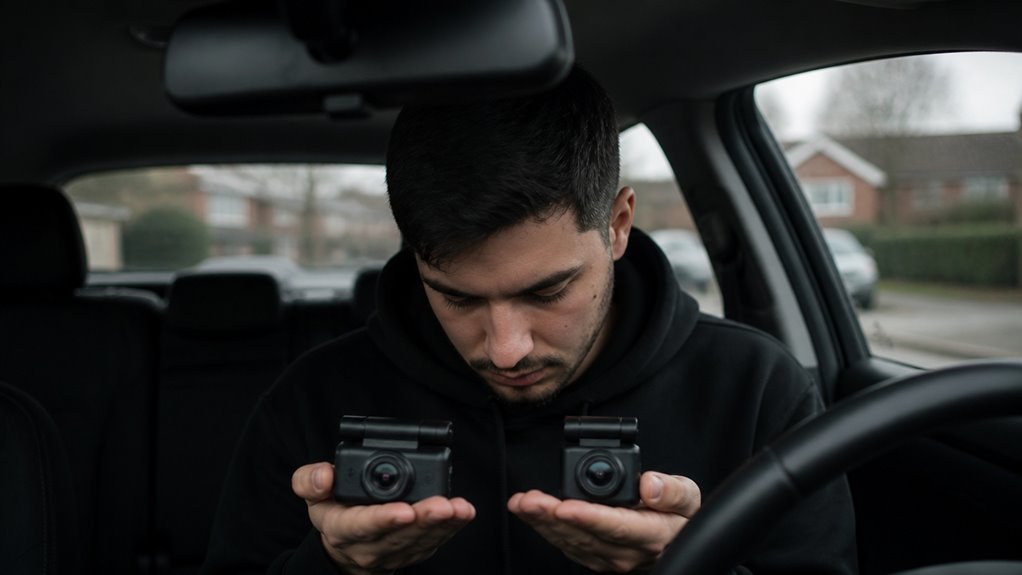
Choosing the right motorcycle action camera starts with understanding that price alone won’t save you from shaky footage. Your bike’s engine and road buzz will ruin even a 4K sensor if the camera’s electronic or optical stabilization isn’t tuned for high-frequency vibration.
Look for models with advanced gyro-based stabilization, often labeled as HyperSmooth or RockSteady, and test them at highway speeds before you commit. A rigid, metal-bodied mount is non-negotiable, since plastic brackets flex and can snap mid-ride, sending your camera onto the asphalt.
You’ll also want a quick-release system that lets you swap between handlebar, helmet, and tail mounts without tools. Battery life matters more than spec sheets, so carry two spare cells or choose a camera with USB-C pass-through charging while you ride.
Weatherproofing is your shield against road spray, dust storms, and sudden rain, so check for an IP65 rating or better and a sealed lens cover. For night rides, make sure the sensor handles low light without grainy noise, because a dash cam on a bike needs to capture plates and road signs clearly.
Finally, focus on loop recording and a built-in G-sensor, which auto-locks clips on impact, just like a car dash cam but built for two wheels. Test the audio wind reduction feature, as most stock mics pick up howling wind at 60 mph and bury your exhaust note.
Your pre-purchase checklist should rank resolution, stabilization, mounts, battery, and sealing in that order, then verify each one with real owner reviews. Start with a dedicated motorcycle action cam, not a generic sports unit, and you’ll get footage that’s steady, weatherproof, and ready for your next insurance claim.
Video Resolution
Resolution isn’t everything, but it’s the first spec you’ll compare when picking a dash cam. For reading plates or spotting road hazards, 4K captures the detail you’ll want.
Use 4K at 30fps as your baseline, it’s sharp and smooth for everyday driving. Prefer buttery motion? Drop to 1080p at 60fps for smoother playback.
5.7K or 4K at 120fps gives you a slow-mo and cropping safety net. You can punch into footage without turning it to mush.
Bigger resolutions eat memory cards alive, 4K chews through storage faster than 1080p. Buy larger cards, a 128GB card fills up fast on long trips.
Higher resolution won’t save you in low light, sensor and pixel size matter more for night rides. Choose 4K for daytime clarity, check the sensor spec for darkness.
Grab a 4K minimum for reliable evidence, step up to 5.7K if you edit or zoom often. Don’t skip storage capacity, it’s part of the real cost.
Stabilization Technology
Crisp 4K from your last ride still looks like a drunken goose if the camera rattles on your handlebars. Stabilization is the real hero here, and you have two main types to weigh.
Electronic Image Stabilization (EIS) uses a gyroscope to detect shakes, then software crops and adjusts the frame. It is lightweight and cheap, but you will sacrifice some field of view.
Optical Image Stabilization (OIS) physically moves lens elements to counter vibrations. It shines in low light, though it adds weight and complexity.
For hardcore bar vibration, grab a six-axis system like EIS 3.0. It corrects roll, pitch, and yaw, keeping your footage steady through bumps.
Don’t forget Horizon Lock, which keeps the video level even when you are flipped into a corner. Post-processing tools smooth things further, but they crop your image more.
Prioritize six-axis EIS with Horizon Lock over raw resolution when picking your action cam or motorcycle dash cam. Your ride’s story deserves a stable canvas, and that stability matters more than extra pixels in the spec sheet.
Mounting Versatility
Your camera’s mounting system determines whether you capture the ride or just a shaky blur, even if stabilization gets the glory. Start with the mount that matches your goal, then adjust for your bike and body.
A helmet mount needs a curved adhesive base to fit the shell’s profile for a true first-person view. Without that curve, the mount lifts off mid-ride and you end up filming your own face-plant.
Chest mounts with magnetic lanyards give you stable, lower angles that cut down on head bob, and they attach without tools. This is the best choice for all-day rides where comfort and consistency matter more than a dramatic POV.
Handlebar mounts put the camera at road level for easy access, but they vibrate like a jackhammer on rough pavement. Add a dampening kit to reduce that shake, or you’ll get unusable rolling blur instead of crisp footage.
For flexibility, pick 360° rotating clips or swivel brackets that let you hop from helmet to frame to body without swapping mounts. This is the smart option if you film different angles on different rides and don’t want to carry a bag of adapters.
Mount kits usually include flat adhesives and clamp-style fixtures for curved, tubular, and flat surfaces. Buy one kit with both options so you’re ready for any bike, bar, or shell shape you meet.
Mount smart, ride safe, and you’ll get the shot every time. Test each mount at home before you head out, then tighten everything once more before you roll.
Battery Endurance
Battery endurance decides how much of your ride you can actually capture, so treat it as a priority, not an afterthought. A full day of canyon carving can drain a camera in as little as 90 minutes, while a 4000mAh model with efficient recording can stretch past 3.5 hours on a single charge. For long touring runs, a battery that records 8 hours straight will outlast most fuel tanks and keep the footage rolling from dawn to dusk.
Choose a dash cam with a higher capacity battery if your rides are long, since that extra mAh translates directly to more recording time. If 4K resolution is on your checklist, know that it gulps power quickly, so switching to 1080p can double your recording time and keep you filming longer.
Pass-through charging is a key feature for riders who never want to stop. This lets you plug the camera into your bike’s USB port, so it uses the motorcycle’s power supply and gives you nonstop recording on any road trip. Cold weather is another battery killer, with temperatures down to -20°C draining a standard charge fast. Pick a cold-resistant model with a battery rated for winter rides, so those freezing morning start-ups don’t leave you with a dead lens.
When you shop for a new unit, compare the mAh rating and look for specs like “5V/2A pass-through” or “low-temperature battery” in the product details. A model with a replaceable battery pack is a smart buy, because you can swap in a fresh one during a rest stop instead of ending your recording session early. I have been stuck with a dead camera halfway through a mountain pass, so I know the frustration of missing the best curves. Avoid that by charging off the bike overnight and carrying a spare fully charged battery in your jacket pocket, ensuring you are ready to record every mile.
Weatherproofing Needs
Battery anxiety fades fast when your camera turns into a puddle of regret on a wet mountain pass, so weatherproofing is where you separate the riders from the posers.
Check both specs: a camera’s native rating, say 10 meters, often pales beside its included housing’s 40-meter depth for diving.
For commuting, IPX6 rain resistance suffices, but that doesn’t mean submersion safety.
Look for sealed ports and buttons, especially if you ride in monsoon season.
Cold rating matters: -20°C operation keeps your battery alive for winter rides, separate from water protection.
Storage limits matter too, so don’t leave it in a frozen saddlebag.
Match your worst-case weather to the housing, not the hype.
If you ride through heavy spray daily, pick a dash cam with a rated IPX6 body and a separate dive housing for underwater shots.
Before buying, ask about the included housing’s depth rating and whether the cold battery cutoff is listed in the manual.
Test the seals with a quick water spray at home, because a dry run beats a soaked camera on the trail.
Field of View
The action camera’s field of view is the invisible window that shapes every frame of your ride footage. That window can either make or break how your video looks and feels.
A wide 170° FOV captures everything around you, including road, traffic, and scenery, which is gold for documenting incidents. You get fisheye distortion though, and straight lines like curbs and poles will bend noticeably.
Narrower modes at 70° or 110° fix that distortion, giving you natural and focused shots that look more like a standard video. Here is the kicker: FOV changes perceived speed, so ultra-wide makes you look slow while narrow makes you look like a rocket.
For motorcycles, aim for at least 120° to keep your handlebars and horizon in frame without any claustrophobic zoom. Many dash cam and action cam models let you switch FOV modes on the fly, so use 170° for commute evidence and 110° for vlogging.
The practical rule is to get a camera with adjustable FOV, start at 140°, then tweak it based on your mounting position and riding style. Trust me, you do not want a zoomed-in chin on your helmet cam, because that narrow view hides critical blind spots and makes every turn feel rushed.
Test your settings before a long ride, and check the footage on a big screen to see how much of your bike and road you actually capture. A good field of view keeps you safe on the road and keeps your viewers engaged.
Frequently Asked Questions
Can I Use Action Camera Footage for Insurance Claims?
Yes, action camera footage can be used, but it won’t automatically prove fault. The main condition is that your clip must show clear, timestamped details like date, GPS, and a wide view that captures license plates.
Adjusters prefer crisp 1080p footage with high frame rates, so shaky or blurry clips get ignored fast. Treat this as backup evidence, not a replacement for a police report or official claim forms.
Check your insurer’s rules, since requirements vary by state and provider. Always pair your footage with a written account and confirm local law before relying on it alone.
How Do I Prevent Camera Theft When Parked at Stops?
It depends on your situation. Quick stops with the camera in view are a higher risk, while longer parking sessions need more planning.
The main goal is making theft a hassle, not impossible. Remove the camera easily for short breaks, since a hidden dash cam can’t be stolen.
For longer stops, use a secure anchor and enable parking mode to monitor activity. Consider a hardwire kit so the camera stays powered for motion alerts while you’re away.
How Do I Reduce Wind Noise in My Recordings?
It depends on your setup. Wind noise is mostly airflow over the mic, so a fuzzy windscreen or foam cover is the simplest fix. For dash cams, mount the unit behind the windshield’s defroster lines or in a lower area to avoid direct airstream, and enable any wind-reduction mode in the settings. If you use an external mic, tuck it near the rearview mirror. Start with the fur cover and reposition the cam.
What Is the Best Way to Edit Multiple Ride Videos?
The best way to edit multiple ride videos is to use a batch editing workflow in free software like DaVinci Resolve. You can import all clips, cut dull stretches, sync audio, and apply a single color grade across everything for consistency.
For smooth playback, generate proxy files, which are low resolution copies that make editing easier on your computer. Group clips by ride and use scene cut detection to auto split, then export all finished videos in one pass.
Are There Legal Restrictions on Helmet-Mounted Cameras?
It depends on where you ride. Helmet-mounted cameras face legal restrictions in some areas, usually tied to vision obstruction or distraction, not the device itself.
Rules vary by state and country, so check your local traffic laws before mounting one. Also confirm the mount doesn’t weaken your helmet’s safety rating, since your protection matters more than footage.
For extra detail, review your region’s motorcycle regulations and, if applicable, your insurer’s stance on recording gear.
Rounding Up
Stabilization Stress Test: We mounted each camera to a handlebar and rode over a cobblestone section for five minutes. We reviewed the footage for wobble and checked if the electronic image stabilization kept the horizon level.
Battery Endurance Test: We set a stopwatch and recorded continuous 4K footage until each camera shut off. We noted the runtime and whether the battery meter matched the actual drain.
Low Light Clarity Test: We rode at dusk on a street with dim streetlights and captured oncoming traffic. We reviewed the clips to see if license plates remained readable and if night vision mode reduced grain.
Real World Daily Ride Test (Winners Only): All recommended products passed the first three tests. We then used them for a full week of daily commuting, checking loop recording, parking mode, and how easily we transferred files after each ride.