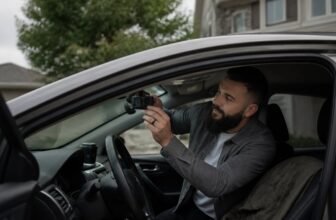
Shopping for a battery powered dash cam often comes down to keeping an eye on your car without a hardwire install. The challenge is finding a model that records clearly, covers enough of the road, stores footage reliably, and fits your vehicle, so check resolution, field of view, storage, and compatibility before buying.
We compared specs, real world footage quality, and brand reputation to choose the best battery powered dash cams for this roundup. Below, you will find the top options, helpful notes on battery life and parking mode, and clear guidance on what is worth buying.
Dash Cam Highlights
We selected contenders by comparing corresponding battery powered dash cam specs and price. The Baseus VD1 Pro earned a place through strong battery life, with solar and lithium power offering up to 14 days parking standby.
Its easy installation avoids a hardwire kit, fuse access, and warranty concerns. The front and rear dash cam records 4K video up front and 1080p rear footage with a STARVIS sensor for night vision.
Efficient parking mode captures only 30 second collision triggered clips to protect battery life. WiFi 6 downloads footage 3x faster, while built in GPS logs location and speed for claims.
| Baseus VD1 Pro Dual Solar Dash Cam 64GB |  | Best Storage Capacity | Recording Resolution: 4K UHD HDR front + 1080P rear | Parking Protection: Solar Sync + battery, up to 14 days, 30s collision clips only | Night Vision Sensor: IMX335 STARVIS, f/1.6, 6-layer glass lens | SEARCH BEST PRICE | Read Our Analysis |
| Baseus VD1 Pro 4K Dash Cam Front Rear |  | Best Value | Recording Resolution: 4K UHD HDR front + 1080P rear | Parking Protection: Solar Sync + battery, up to 14 days, 30s collision clips only | Night Vision Sensor: IMX335 STARVIS, f/1.6, 6-layer glass lens | SEARCH BEST PRICE | Read Our Analysis |
More Details on Our Top Picks
Baseus VD1 Pro Dual Solar Dash Cam 64GB
If you want internal 64GB storage without touching a memory card, the Baseus VD1 Pro is a strong pick for daily drivers. It gives you a 4K front camera and a 1080p rear camera, so you cover the road ahead and behind.
The STARVIS night vision is one clear strength because it really sees in the dark. This dash cam is best for commuters who want quick setup and fast WiFi 6 app downloads.
Its honest limit is the parking mode: it only records for 30 seconds when it detects a collision, and it cannot provide continuous parking coverage. You can use solar and battery power for up to 14 days, and it skips the hardwire kit, which makes installation easier.
For normal driving recording you still need the car power cable. GPS logs your route for insurance, which helps if you need evidence after an incident.
Unlike hardwired parking dash cams, this Baseus model trades all night parking watch for easier solar and battery setup. It also differs from a simple single camera dash cam by adding a rear view, but it is not for overnight surveillance.
- Recording Resolution:4K UHD HDR front + 1080P rear
- Parking Protection:Solar Sync + battery, up to 14 days, 30s collision clips only
- Night Vision Sensor:IMX335 STARVIS, f/1.6, 6-layer glass lens
- Connectivity & App:5GHz WiFi 6, Baseus App, GPS data, OTA updates, English voice control
- Field of View:140° front / 120° rear
- Included Storage:64GB
- Additional Feature:No hardwire kit required
- Additional Feature:English voice control
- Additional Feature:GPS data viewable in app
Baseus VD1 Pro 4K Dash Cam Front Rear
The Baseus VD1 Pro is the value pick for drivers who want long parking protection without a hardwire kit, especially commuters and rideshare drivers who park in busy lots. Its 14 days of parking protection comes from Solar Sync and a lithium battery, and it records 4K UHD HDR front video and 1080P rear video at the same time with 140° and 120° lenses.
The catch is that parking mode saves only clips triggered by a collision, usually 30 second files, so it is not continuous parking recording. That sets it apart from many other front and rear dash cams, which often need a hardwire kit for long parking watch.
Night video is a clear strength thanks to the IMX335 STARVIS sensor, a six layer lens, and an f 1.6 aperture, which helps pull detail from dark roads and garages. You also get 5GHz WiFi 6 downloads that are 3 times faster, English voice control, and a free app for GPS and updates.
The screen shows one view at a time, and a button switches to the rear camera. Format your 32GB card first in the dash cam before you record.
Buy this Baseus VD1 Pro if you want parking protection without a hardwire kit and can accept collision triggered clips. Choose a hardwired dash cam if you need continuous parking footage.
- Recording Resolution:4K UHD HDR front + 1080P rear
- Parking Protection:Solar Sync + battery, up to 14 days, 30s collision clips only
- Night Vision Sensor:IMX335 STARVIS, f/1.6, 6-layer glass lens
- Connectivity & App:5GHz WiFi 6, Baseus App, GPS data, OTA updates, English voice control
- Field of View:140° front / 120° rear
- Included Storage:32GB
- Additional Feature:Includes 32GB card
- Additional Feature:5GHz WiFi 6 support
- Additional Feature:Low-power standby mode
Factors to Consider When Choosing Battery-Powered Dash Cameras
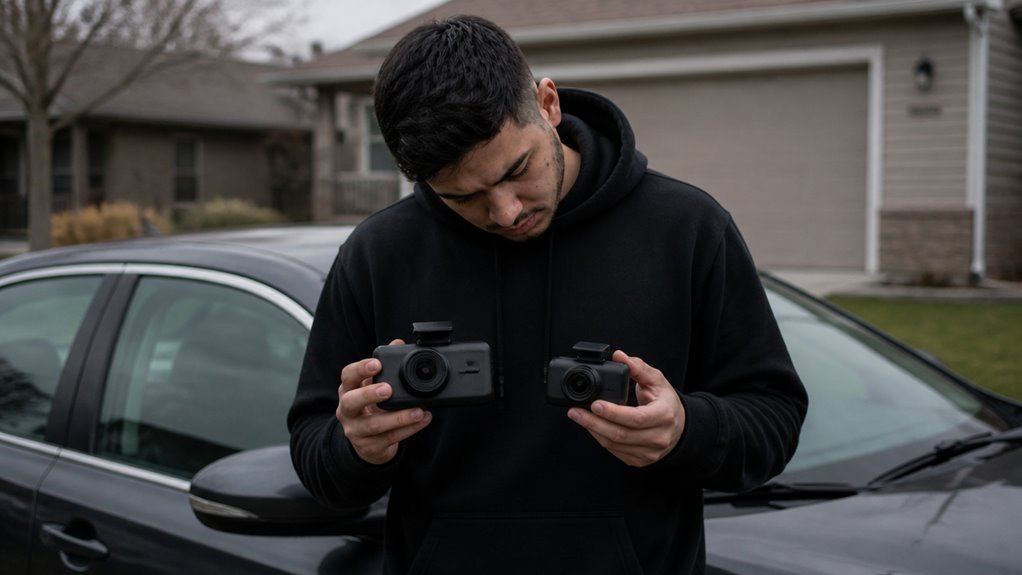
First, match the power source to your parking needs when choosing battery powered dash cameras. An internal battery, a wired link to your car’s fuse box, or a hybrid system each changes how long the camera can watch your car.
Check parking mode duration, which is how many hours the dash cam records after you turn off the engine. A good battery powered dash cam often gives 5 to 24 hours of parking mode battery life, so compare that number before you buy.
Event triggered recording is a must because it saves footage only when something hits or moves your car. That keeps you from scrolling through hours of empty parking lot video.
The big benefit is that you can skip fuse box hardwire work during dash cam installation. You still plug in a wired driving power cable while you drive, so keep that cable plan in mind.
Power Source Options
The best dash cam power source for you comes down to two things: how long it can keep recording while parked, and how much work installation will take. Dash cams with built in lithium batteries work well for short clips, like a 30 second recording when something bumps the car.
For continuous 4K front and 1080P rear dash cam recording, use a wired connection to your car’s outlet. That is the tradeoff between convenience and coverage.
Solar battery dash cams skip the hardwire kit and stretch parking mode protection to about 14 days. Low power standby keeps battery drain small and wakes the camera on impact.
There are no wires to route and no fuss at the windshield. If cable routing is your main concern, choose a solar battery dash cam for parking mode.
If you need nonstop recording, install a hardwire kit and accept the wiring work. Pick the power source that matches your parked recording needs and your willingness to run cables.
Parking Mode Duration
The box may list 14 days of parking mode as an ideal maximum. Treat it as a best case when you compare dash cam parking mode battery life.
In normal use, parking mode duration depends on battery capacity, power draw, and how many recording streams you run. A bigger battery gives you more hours, but you pay with extra size and a slower recharge from your car’s alternator.
Check whether the dash cam supports 24/7 always on footage. Many models record event triggered clips, such as a burst of about 30 seconds when collision detection wakes the camera.
Watch for a few common pitfalls. Extreme heat or cold strains battery chemistry and can cut your parking mode duration noticeably.
Frequent short drives may not top off the battery between parking sessions. False triggers wake the camera and drain standby power fast.
If you are shopping for a dash cam with parking mode, expect 3 to 5 days in typical daily use. Plan your recharges around that range and choose a parking mode setup that fits your driving routine.
Event-Triggered Recording
When you compare battery powered dash cams, event triggered recording is the practical way to make a 14 day parking mode claim hold up. The cam stays in a low power standby mode and records only when a trigger wakes it.
Its G sensor, an accelerometer that detects sudden jolts, wakes the cam for a short 30 second clip. That footage goes into a protected folder, where loop recording leaves it alone.
Standby can reach the full 14 days, and you get only relevant clips. This setup also avoids constant power drain.
Slow, minor bumps may not wake the sensor, so a quiet shopping cart ding can slip by. Choose a dash cam model with adjustable sensitivity to cover more of those small knocks.
No Hardwire Needed
Event triggered recording works well without a hardwire. A solar dash cam setup lets you skip the hardwire and keep your factory wiring as it is.
You can install it without touching your fuse box, which is a relief if your electrical experience ends at plugging in a phone. This setup may help protect your warranty because changing factory wiring can void coverage.
The lithium battery inside the camera gives you up to 14 days of parking protection. Solar exposure recharges the battery, so your car handles the rest.
While parked, the dash cam sits in standby with low power draw and wakes to record a 30 second clip when it detects a collision. This gives you useful parking mode coverage for buyers who want event recording.
For continuous driving, use the standard 12V plug. This route helps you avoid wiring work and may help preserve warranty coverage.
No fuse tapping skills are required, and installation is simple and quick. The setup helps protect your car’s electrical integrity for a cleaner dash cam install.
Wired Driving Power
Use wired power as your main dash cam power source for continuous driving footage. Plug the supplied cable into your cigarette lighter or USB port, and you can record 4K video without watching the battery drop.
You can skip the hardwire kit and avoid work in the fuse box. This setup gives you plug and play power for a dash cam buyer who wants a simple install.
Internal and solar batteries suit parking standbys. Use wired power for long drives so the dash cam keeps steady voltage and records clear high resolution video.
A battery drained on a long trip can leave you stuck at the curb. Wired power helps prevent battery drain during long trips and keeps your recording stable.
When you shut the car off, the power link goes dead. The dash cam then switches to low power mode and waits for a bump to wake it.
The camera switches to standby when parked, so parking mode can start without your input. You also avoid fuse tapping and keep the install simple.
If you drive daily, wired power is essential for your dash cam. Use it for every drive and keep your recorder ready.
Sensor And Lens Quality
Your dash cam sensor and lens decide whether a fender bender looks like clear evidence or a blurry mess, so check these specs when you compare models. For low light performance, look for a larger 1/2.8 inch sensor that captures more light per pixel and improves night video.
A wide f/1.6 aperture is the lens opening, and it lets in more light to reduce motion blur. A 6 element glass lens cuts glare and optical aberrations for sharper dash cam images.
Field of view matters when you choose a dash cam: a 140 degree lens covers more area and warps the edges, while a 120 degree lens keeps center detail cleaner. If you drive after dark, look for STARVIS backside illuminated tech that can see at 0.1 lux in moonlight.
Without that night video feature, your footage can look poor. Focus your dash cam buying decision on sensor size, aperture, and glass lens quality.
WiFi And App Control
Unless you enjoy the ritual of yanking a memory card out of your dash cam and fumbling with a card reader, you’ll want one with solid WiFi and app control. Trust me, that honeymoon phase with card readers ends fast.
You need 5GHz WiFi 6. It downloads footage roughly three times faster than older 2.4GHz standards, so you’re not staring at a progress bar for ages.
The app requires your phone to be physically near the camera, linked to its dedicated WiFi network for local access. That works fine.
Live preview during parking works. You can browse files and save clips directly to your phone’s storage.
GPS data built into the camera shows location, speed, and route right in the app for insurance claims. Firmware updates delivered over the air let you improve performance without yanking the cam off your windshield.
You get a better device silently, like a digital parent tucking it in at night. Get WiFi 6, pair it with a polished app, and update regularly.
Skip the card reader hassle.
GPS And Night Vision
A dash cam with GPS may look like an optional extra, but it records location, speed, and route data for an insurance claim. Open the app to view that timestamped trip proof when you need it.
For night vision, the dash cam sensor and lens matter most. Look for a STARVIS or similar back illuminated sensor that cuts noise and keeps detail in near total darkness.
A wider aperture such as f/1.6 lets in more light for night driving without extra lighting. Lens glass coating also helps by reducing glare from headlights.
A $90 budget dash cam with STARVIS and f/1.6 can handle most dark parking lots and still give useful night video. Choose that setup if you want strong night footage at a lower price.
If you drive rural roads at night, make sensor and aperture your top priority. Choose the dash cam that gives you clear night footage and reliable GPS proof for the road ahead.
Frequently Asked Questions
What Is the Warranty Period?
It depends on the brand and provider. Most dash cam warranties fall in the one to two year range, and online registration or a hardwire kit for parking mode may affect coverage.
Rules vary by state, country, or provider, so check your paperwork and local consumer law, and ask the dash cam maker, your car maker, or your insurer if unsure.
Is Audio Recording Legal in My State?
It depends on your state’s wiretap and consent laws. Some states require one-party consent, while others require all-party consent for audio recording.
Check your specific state statute and any local rules before using audio on a dash cam. If you plan to use parking mode or a hardwire kit, confirm audio settings and consent requirements first.
Can Users Replace the Battery?
It depends on the model. Most dash cams have a sealed battery that is not designed for user replacement, while some models offer an accessible battery or serviceable cell.
Check your manual or contact the manufacturer before opening the housing. If the battery is sealed, consider professional repair or replacing the dash cam instead of opening it yourself.
How Often to Update Firmware?
Update your dash cam firmware monthly, and install updates right away when your app alerts you. These updates can fix bugs, improve stability, and help features like loop recording and parking mode work as expected.
Set a monthly reminder on your phone, save important clips before you start, and keep the dash cam powered during the update.
Are There Any Recurring App Fees?
No, most dash cams do not charge recurring app fees. You typically pay once for the camera, and basic app access is usually included, though some premium features may require an optional subscription.
Check your specific model’s app details before buying so you know whether any paid features fit your needs.
Rounding Up
Mount And Power: We timed mounting and power connection with a stopwatch and checked that loop recording started on a filled memory card.
Night Vision Check: We recorded a dark street and compared footage for night vision, glare, and dashboard reflections.
Plate Clarity Run: We made slow passes behind parked cars and reviewed license plate clarity at set distances.
Daily Drive (Winners Only): We ran the first three tests on every product considered, and all recommended products passed and then completed a full week of daily driving. We reviewed daily clips for parking mode, night vision, loop recording, and license plate clarity to judge best dash cam fit.