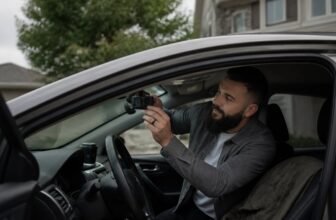
Road trips go smoother when your dash cam can recharge on the go and keep recording without a wiring headache. Before you buy, check video resolution, field of view, storage capacity, and compatibility with your vehicle and mounting setup, since these details decide how useful parking mode and loop recording will be.
These picks come from comparing specs, real world footage quality, and brand reputation. Below you’ll find the best rechargeable dash cams, plus helpful notes on what is worth buying for daily drives and long getaways.
Dash Cam Highlights
We compared corresponding specifications, appropriate features, and price across these dash cams. Each pick combines strong 4K video, night vision, parking mode, and GPS for road trips.
Solar assisted parking mode gives 14 day standby, while the front 4K camera with IMX335 sensor records scenic and low light footage. WiFi 6 downloads clips faster without removing the SD card, and easy to install mounting suits a front and rear dash cam setup.
Built in GPS logs speed and routes for claim evidence, and loop recording handles long drives. These comparable specifications, appropriate features, and price checks suit rideshare drivers.
| Baseus VD1 Pro 4K Dual Solar Dash Cam |  | Longest Parking Mode | Recording Resolution: 4K UHD HDR front; 1080P rear | Night Vision Sensor: IMX335 STARVIS, f/1.6 aperture | Lens Angle: 140° front; 120° rear | SEARCH BEST PRICE | Read Our Analysis |
| Baseus VD1 Pro Solar Dash Cam Front Rear |  | Superior Night Vision | Recording Resolution: 4K UHD HDR front; 1080P rear | Night Vision Sensor: IMX335 STARVIS, f/1.6 aperture | Lens Angle: 140° front; 120° rear | SEARCH BEST PRICE | Read Our Analysis |
More Details on Our Top Picks
Baseus VD1 Pro 4K Dual Solar Dash Cam
The Baseus VD1 Pro 4K Dual Solar Dash Cam is best for commuters who worry about parking lot dings and want a parking watch setup without hardwiring. Its clearest strength is long parking mode standby: up to 14 days with a 30 second clip when something bumps your car.
The 4K front camera uses an IMX335 STARVIS sensor that sees in near darkness, so you can read plates at midnight in many low light parking situations. The rear camera shoots 1080P at 120 degrees, and a 64GB card ships included for quick setup.
One honest limit is that Solar Sync and long standby depend on sunlight, so a covered garage may not keep the battery topped up as well. Compared with simpler single channel dash cams, this model adds rear coverage and solar assist, but its rear view stays at 1080P while the front records in 4K.
Voice control works hands free, WiFi 6 downloads footage 3x faster, and GPS logs your route. For a commuter who wants parking mode, license plate capture at night, and a dual channel dash cam with solar help, it makes a strong street defense.
- Recording Resolution:4K UHD HDR front; 1080P rear
- Night Vision Sensor:IMX335 STARVIS, f/1.6 aperture
- Lens Angle:140° front; 120° rear
- Parking Mode:Solar Sync + battery, 14 days, event-triggered
- Connectivity & App:5GHz WiFi 6, Baseus App, GPS data
- Included MicroSD Card:64GB card included
- Additional Feature:Built-in GPS
- Additional Feature:Solar Sync System
- Additional Feature:English voice control
Baseus VD1 Pro Solar Dash Cam Front Rear
The Baseus VD1 Pro Solar Dash Cam Front and Rear is best for night shift workers and street parkers who want clear front and rear footage without a hardwire kit for driving. It gives you 4K UHD front and 1080P rear video with a STARVIS sensor that sees in near total darkness, so you are not squinting at grainy footage.
The parking protection lasts up to 14 days via solar and battery, and it wakes only on impact, which is smart, not creepy surveillance. Unlike many front only dash cams, it adds a rear camera and solar parking power, so it differs from basic single view models that need a hardwire kit for parking mode.
Its clear strength is low light clarity for reading plates and details at night, while the honest drawback is that app previews work only when you are close to the car. WiFi 6 downloads clips 3 times faster, but remote checks are not an option, so this is not a cloud connected dash cam.
Format the microSD in the camera first, or you will blame me later. If you hate false alarms and love clarity, this is a quiet guardian for parking mode and night driving footage.
- Recording Resolution:4K UHD HDR front; 1080P rear
- Night Vision Sensor:IMX335 STARVIS, f/1.6 aperture
- Lens Angle:140° front; 120° rear
- Parking Mode:Solar Sync + battery, 14 days, event-triggered
- Connectivity & App:5GHz WiFi 6, Baseus App, GPS data
- Included MicroSD Card:32GB card included
- Additional Feature:Solar Sync System
- Additional Feature:English voice control
- Additional Feature:Wired rear camera
Factors to Consider When Choosing Rechargeable Dash Cameras
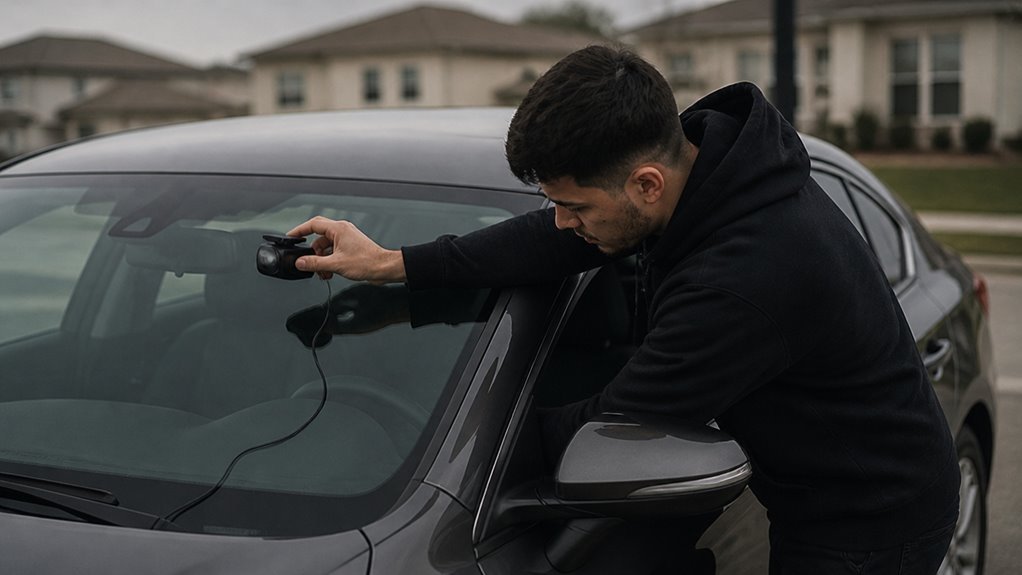
Choosing a rechargeable dash camera means choosing a power plan. Check battery life, parking mode efficiency, charging options, video clarity, and storage limits before you buy.
These five details shape your dash cam experience and help you compare models with confidence. If you skip them, you may buy a device that dies when you need it most.
Battery Life Duration
Battery life is the key spec for a dash cam in parking mode. When your vehicle is off, the camera switches to low power standby and uses very little energy.
Event triggered clips run for 30 seconds when the sensor triggers. In an idle car with rare triggers, the internal battery can last up to 14 days on one charge.
Continuous recording during active driving drains the internal cells fast, so use the car power cable for that. Ambient temperature and sensor sensitivity also cut standby time, and frequent motion events shorten the parking mode window.
For dash cam buyers who want parking protection without hardwiring, that stretch of up to 14 days reduces the need to fuss with cables every night. This internal battery works well for parking coverage, and the car power cable handles long driving sessions.
Parking Mode Efficiency
Parking mode efficiency matters more than raw battery life because weak power management can drain a large dash cam battery overnight and leave you with no video evidence. Choose a dash cam with event triggered recording, which saves a 30 second clip when impact detection fires.
That small power saving trick can stretch standby time to 14 days on a good internal cell, and that is the real test of parking mode efficiency. If you want reliable 24/7 parking surveillance, compare standby current and energy density before you compare capacity.
G sensor sensitivity controls how often the dash cam wakes and records. Set it too high and you capture every pigeon step, but set it too low and you miss the parking lot ding.
Solar assisted systems can help a dash cam battery pack in daylight. Expect gaps during long dark overnighters, so match the battery pack to your typical parking time.
For a clean install and steady power, buy a dash cam hardwire kit with adjustable voltage cutoff. Without a hardwire kit, your parking mode duration depends on the battery energy density and standby current consumption.
Choose smart triggers over a bigger battery when you buy a dash cam for parking mode. Event triggered recording wins every time, and your past self will thank you.
Charging and Power Options
Power setup matters as much as a 4K sensor because it decides whether your dash cam earns its keep or sits unused. Continuous driving recording needs a hardwired connection to the car’s fuse box or cigarette lighter.
- Parking mode uses low power standby to sip energy, and the camera’s internal battery can last up to 14 days. It wakes instantly to capture an impact, so you get the clip without constant drain, which suits a week at the airport.
- Solar assistance can extend parking time, and it works for short clips triggered by a collision. Treat solar as a trickle charge for clips that last about 30 seconds, and do not expect full recording from it.
Format your SD card in the device before first use. That keeps power management consistent and prevents errors that drain the battery.
Otherwise, you may find a dead dash cam when you need it most. Plan for wired driving power, a parking mode that uses the internal battery, and low standby, then choose solar assistance only for short collision clips.
Video Quality Clarity
If you plan to spend money on a dash cam, video quality is where that money pays off. Choose sharp plate capture so you can read tags and license plates.
For the front camera, choose 4K UHD with HDR. It helps you read signs and tags in harsh high contrast light.
For night driving, choose a wider aperture with a lower f number such as f/1.6. More light reaches the sensor and motion blur drops.
Pair the wide aperture with a STARVIS sensor like the IMX335. You get usable color footage in near darkness.
Use a 140° wide front lens to catch intersections. For the rear lens, use 120° to reduce distortion.
Choose dual channel recording with separate sensors. Each view keeps full resolution.
Prioritize 4K video, a low f stop, and a STARVIS sensor. Your future insurance claim will thank you.
Storage Capacity Limits
Sharp 4K dash cam footage fills storage fast, much like snacks disappear on a road trip. A 64GB card with dual 4K and 1080p recording may hold only a few hours before looping.
That capacity works for a daily commute, but it can fall short on a long road trip. The memory card fills first and sets the real storage limit for your dash cam.
When the card fills, the camera overwrites the oldest clips without warning. You can manage this by formatting the microSD card inside the camera before first use, since skipping that step can corrupt the card.
If you use parking mode, each event clip lasts about 30 seconds and adds up slowly. Hundreds of incident clips can fit, so you may go weeks before you need to format the card.
For a reliable dash cam setup, buy at least a 128GB microSD card. That gives you enough storage for longer trips and fewer interruptions.
Connectivity and App Support
Dash cam buyers should not skip Wi-Fi. It is your lifeline for viewing footage without pulling the SD card.
Built in Wi-Fi lets you pull clips straight to your phone for instant review, which helps in that “did I see a UFO?” moment. You still need to be physically near the car, so remote viewing from your couch will not work.
Look for Wi-Fi 6 on 5GHz because it downloads up to three times faster. That speed saves you from watching progress bars crawl every time.
Updates delivered over the air fix bugs without unplugging the cam. Companion apps show GPS metadata such as location, speed, and route, which is useful for insurance claims.
Pick a dash cam with a solid app so you can review and manage footage easily. You will thank me later when you are not fumbling with cards in a parking lot.
Frequently Asked Questions
How Long Does the Internal Battery Last Without Sunlight?
It depends, but you will typically get roughly 30 to 60 minutes from the internal battery without sunlight. That battery is small and intended for parking mode or quick saves.
For continuous recording, plug the dash cam into power for longer sessions. If you need parking mode, consider a hardwire kit.
Can I Mount It Behind a Heated Windshield?
It depends on the heated windshield and where you mount the dash cam. Heat and heating lines can warp footage, and extra heat may affect battery life or parking mode performance.
Position the camera away from the heating lines, then record a short loop recording clip to check the view before you finalize the mount.
What Happens if the Solar Panel Gets Scratched?
It depends on how deep the scratch is. Light scratches usually lower charging efficiency while the panel still powers your dash cam, and deep gouges can block enough sunlight that replacement becomes necessary.
Keep the panel clean and check it regularly, then replace it if charging slows or damage looks severe.
Does It Support Wi-Fi for Phone Preview?
Yes, it supports Wi-Fi for phone preview. You connect your phone to the dash cam’s Wi-Fi network and use the companion app to see a live view while you position the camera.
This helps you frame each shot without touching the camera. Keep your phone close during setup, and check the app’s live preview before tightening the mount.
Is the Battery Safe in Freezing Temperatures?
Yes, a dash cam battery is generally safe in freezing temperatures, but expect reduced capacity and possible shutdowns. Cold slows the battery chemistry, so recording time drops and the camera may turn off to protect itself.
Keep the dash cam warm before use, or use a hardwire kit for parking mode so it draws vehicle power reliably. Avoid leaving it exposed to cold overnight.
Rounding Up
Night Vision Check: We compared dark road footage for night vision and license plate clarity, timing mode switching with a stopwatch.
Loop Recording Run: We filled a memory card, started loop recording, and checked that older clips were overwritten without gaps and no segments were missing.
Parking Mode Drain: We parked each unit in parking mode, measured battery voltage before and after a set interval, and repeated with motion triggers.
Daily Drive Week (Winners Only): We ran the first three tests on every product considered. All recommended products passed them, then we drove every recommended product for a full week of daily driving. We reviewed footage for night vision, license plate clarity, and parking mode to judge best dash cam.