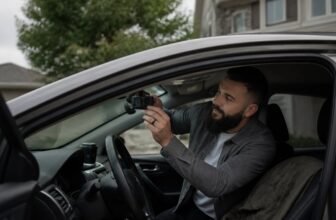
A USB-C dash camera earns its place by capturing clear details when you need them, and the right specs make that happen. Before you buy, focus on video resolution, field of view, storage options, and USB-C compatibility so the camera fits your car and your daily drive.
We compared specifications, real world footage quality, and brand reputation to narrow down the options. Below you will find the best dash cams, helpful notes, and clear advice on what is worth buying for your setup.
Dash Cam Highlights
Products were chosen by comparing corresponding and appropriate specs and price across 4K video, night vision, bitrate, loop recording, and front and rear dash cam options. Each candidate needed clear HDR and WDR results, easy to install USB C power, and GPS.
We matched STARVIS 2 sensors, wide apertures, 5GHz WiFi 6 transfers, and Class 10 storage to confirm night vision and quick clip downloads. Hardwire kits and constant power were checked for parking mode and loop recording.
Best for rideshare drivers options required G sensor event locks and constant power. Final picks balanced specs and price without paid favorites.
| galphi 4K Dash Cam WiFi 32GB Card |  | Best Value | Video Resolution: 4K UHD front | Night Vision: F1.6, WDR, exceptional night vision | Continuous Recording: Loop recording | SEARCH BEST PRICE | Read Our Analysis |
| REDTIGER F7NP 4K Dash Cam Front Rear |  | Best Overall | Video Resolution: 4K front + 1080P rear | Night Vision: STARVIS 2, F1.5, WDR/HDR | Continuous Recording: Seamless loop recording | SEARCH BEST PRICE | Read Our Analysis |
| ROVE R2-4K Dual Dash Cam 128GB Card |  | Features-Rich Choice | Video Resolution: 2.5K QHD front (upscaled 4K) + 1080P rear | Night Vision: Sony STARVIS 2, F1.5, HDR, low-light | Continuous Recording: Seamless loop recording | SEARCH BEST PRICE | Read Our Analysis |
| BOTSLAB G300H Plus 4K Dual Dash Cam |  | Ultra-Wide Vision | Video Resolution: 4K front + 1080P rear | Night Vision: STARVIS 2, F1.5, HDR, low-light sensitivity | Continuous Recording: Continuous loop overwrite | SEARCH BEST PRICE | Read Our Analysis |
| G300H Plus 4K Dash Cam Front and Rear with Type C Hardwire Kit |  | Best With Hardwire Kit | Video Resolution: 4K front + 1080P rear | Night Vision: STARVIS 2, F1.5, day/night clarity | Continuous Recording: Continuous surveillance / time-lapse parking recording | SEARCH BEST PRICE | Read Our Analysis |
| 2.5K Dual Dash Cam Front and Rear |  | Budget-Friendly Pick | Video Resolution: 2.5K front (2560×1440P) + 1080P rear | Night Vision: Starlight night vision sensor, WDR | Continuous Recording: Loop recording | SEARCH BEST PRICE | Read Our Analysis |
| ROVE R2-4K Dual PRO Dash Cam (Front/Rear) | 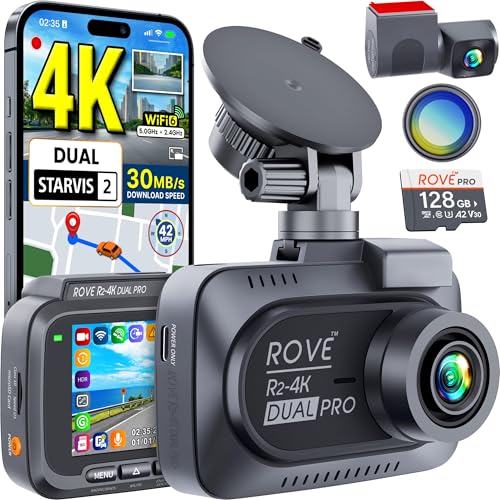 | Professional Grade | Video Resolution: 4K front + 2K rear | Night Vision: Sony STARVIS 2, HDR, high light sensitivity | Continuous Recording: Time-lapse / continuous parking recording | SEARCH BEST PRICE | Read Our Analysis |
More Details on Our Top Picks
galphi 4K Dash Cam WiFi 32GB Card
The galphi 4K Dash Cam WiFi 32GB Card gives you 4K quality and a 32GB memory card in the box, so you do not pay extra for that accessory. Best for new drivers and rideshare drivers, it keeps the setup simple and the view clear.
One clear strength is the 160 degree lens with a wide aperture and WDR, so night footage stays sharp in rain or snow. You get useful dash cam evidence after a minor collision, and the 4K footage gives you clear detail.
The honest drawback is the 32GB card, which was 64GB before the chip shortage, so you have less storage than earlier buyers. The price did not go up, but that smaller card is still a real limitation for long drives or heavy clip saving.
Compared with many dash cams, this one differs by using a screenless design and packing the memory card in the box. That makes it a practical pick for shoppers who want WiFi dash cam convenience without buying extra accessories.
5GHz WiFi downloads clips at up to 8MB/s, so you spend less time waiting to review footage. The screenless design also keeps you focused and gives you a compact shape that blocks less of your view.
Loop recording overwrites old files, while the G sensor locks footage after a collision to protect the clip you need. For parking mode for 24 hours, you will need a hardwire kit sold separately, which is a small extra cost.
Setup is easy even for first time users, and the controls suit drivers who want a no fuss dash cam. The galphi 4K Dash Cam WiFi 32GB Card is a balanced pick for daily driving, but check the card size and hardwire cost before you buy.
- Video Resolution:4K UHD front
- Night Vision:F1.6, WDR, exceptional night vision
- Continuous Recording:Loop recording
- Impact Detection:G-sensor locks footage
- Parking Mode:24-hour parking mode (time-lapse; hardwire kit not included)
- Hardwire Kit:Type C hardwire kit required (not included)
- Additional Feature:32GB card included
- Additional Feature:5GHz WiFi app
- Additional Feature:Screen-free slim design
REDTIGER F7NP 4K Dash Cam Front Rear
For dash cam shoppers who want crisp 4K footage without babysitting a finicky gadget, the REDTIGER F7NP is a strong fit in this lineup. It is best for daily drivers who want 4K front video, a 1080P rear view, and a simple setup that starts recording right away.
The clear strength is the STARVIS 2 sensor, which handles night recording well, plus the included 64GB card that makes you ready to roll instantly. The built in 5.8GHz WiFi reaches download speeds up to 20MB/s, so you spend less time waiting for clips to transfer.
The honest limitation is 24/7 parking mode: it locks vital clips on impact, but you need the hardwire kit to use it. Its supercapacitor also resists heat better than lithium batteries, which helps when summer turns your car into an oven.
Compared with front only dash cams in this lineup, it adds a rear view; compared with battery based models, it uses a supercapacitor for heat resistance. You also get an 18 month warranty, making it a practical companion for everyday driving.
Buy the REDTIGER F7NP if you want 4K front video, rear coverage, and a memory card in the box. Plan for the hardwire kit if you want parking mode.
- Video Resolution:4K front + 1080P rear
- Night Vision:STARVIS 2, F1.5, WDR/HDR
- Continuous Recording:Seamless loop recording
- Impact Detection:G-sensor locks crucial clips
- Parking Mode:24/7 parking protection (time-lapse + G-sensor modes)
- Hardwire Kit:Hardwire kit required
- Additional Feature:5.8GHz WiFi 20MB/s
- Additional Feature:GPS route/speed data
- Additional Feature:Supercapacitor heat resistance
ROVE R2-4K Dual Dash Cam 128GB Card
If you drive at night, this one is for you, and it is best for night drivers who want front and rear coverage from one dash cam. The ROVE R2-4K uses a Sony STARVIS 2 sensor with an F1.5 aperture, so you can read plates instead of squinting.
It records front 2.5K upscaled to 4K and rear 1080P at the same time, which gives you more coverage than many single view dash cams. You get GPS, dual band WiFi for 20MB/s downloads, and a free 128GB card, so you can review trips and save clips faster.
Parking mode has three options, but you will need the hardwire kit, so plan for that extra part. The G sensor locks emergency clips, and the camera supports up to 1TB of storage for longer recording.
The supercapacitor and voice guidance help it handle heat and keep you informed, which is a clear strength for hot climates and daily driving. The honest drawback is that the front 4K is upscaled from 2.5K, and the parking mode setup needs more hardware than a basic plug in dash cam.
Compared with basic 1080p dash cams, it adds GPS, WiFi downloads, and a memory card in the box. The install gives you killer night vision and front and rear coverage, so just check your cables after you finish.
- Video Resolution:2.5K QHD front (upscaled 4K) + 1080P rear
- Night Vision:Sony STARVIS 2, F1.5, HDR, low-light
- Continuous Recording:Seamless loop recording
- Impact Detection:G-sensor
- Parking Mode:24/7 parking mode (time-lapse, motion, collision)
- Hardwire Kit:Hardwire kit required (not included)
- Additional Feature:3-inch IPS screen
- Additional Feature:128GB card included
- Additional Feature:OTA firmware updates
BOTSLAB G300H Plus 4K Dual Dash Cam
The BOTSLAB G300H Plus 4K Dual Dash Cam is the night driving pick for night owls, rideshare drivers, and commuters who want clear plate capture after dark. Its STARVIS 2 sensor gives 2x better low light sensitivity, so you have a real chance to read plates at 3 AM.
The F1.5 aperture and HDR help handle glare from headlights and streetlights. You get 4K front video, 1080p rear video, and a 170° view for wide coverage.
A clear strength is fast file transfer: 5.8GHz WiFi moves 4K clips at 20MB/s, about 10x faster than old 2.4GHz dash cams. GPS logs speed, route, and location, and voice commands let you say “start video” without touching the camera.
The supercapacitor handles temperatures from 20°C below zero to 70°C, and you get 18 months of coverage. One honest drawback for iPhone owners: CarPlay and WiFi cannot run at the same time, so check your setup before you buy.
Compared with a basic single camera dash cam, this model adds a rear camera and faster 5.8GHz WiFi, which helps in parking lot bumps and rideshare records. For night driving and plate reading, it is a strong pick.
- Video Resolution:4K front + 1080P rear
- Night Vision:STARVIS 2, F1.5, HDR, low-light sensitivity
- Continuous Recording:Continuous loop overwrite
- Impact Detection:G-sensor (parking monitor)
- Parking Mode:24-hour parking monitor
- Hardwire Kit:Hardwire kit required
- Additional Feature:Voice command control
- Additional Feature:Built-in GPS logging
- Additional Feature:64GB card included
G300H Plus 4K Dash Cam Front and Rear with Type C Hardwire Kit
Buyers chasing true 24/7 parking monitoring will click with this G300H Plus bundle. It is best for drivers who park on the street or in a shared garage and want constant coverage without checking the camera every day.
Its clear strength is the 4K front camera with a STARVIS 2 sensor, which helps capture license plates in low light and even at midnight. The 1080P rear camera watches the lane behind you, though the main limitation is rear footage that will look softer than the 4K front clip when you need a close read of a plate.
Compared with many single lens dash cams, this dual channel dash cam covers front and rear lanes and includes a Type C hardwire kit for parking mode. The front 170° and rear 150° lenses cover multiple lanes and help cut blind spots in traffic.
Parking mode gives you two choices: time lapse records at 1fps all night, and collision detection locks 60 seconds on impact. Use the Type C hardwire kit (ASIN: B0FH2H9DDB) for constant power, and say “Take photo” when you want a quick snapshot without fumbling with controls.
You stay focused on the road because the camera already watches the lanes around you. Choose this bundle for round the clock protection without babysitting.
- Video Resolution:4K front + 1080P rear
- Night Vision:STARVIS 2, F1.5, day/night clarity
- Continuous Recording:Continuous surveillance / time-lapse parking recording
- Impact Detection:Collision detection locks 1-minute footage
- Parking Mode:24/7 surveillance (time-lapse + collision detection)
- Hardwire Kit:Type C hardwire kit included
- Additional Feature:170° front lens
- Additional Feature:150° rear lens
- Additional Feature:Hands-free voice commands
2.5K Dual Dash Cam Front and Rear
This 2.5K dual dash cam is best for budget pick hunters who want front and rear coverage without paying a lot. Its clear strength is the 2560×1440P front video paired with 1080P rear video and a 170° lens for wide coverage.
A starlight night vision sensor and a lens with six layers of glass keep things clear after dark, and WDR handles headlights and shadows so tunnels won’t ruin your footage. Compared with many budget dual dash cams, this model keeps the rear camera at 1080P instead of dropping to a lower resolution and adds stronger night video for the price.
The honest limitation is that the SD card is not included, and parking mode needs the hardwire kit (B0D93LHW94) sold separately. Loop recording overwrites when your card fills, while the G sensor locks clips during crashes.
It supports up to 256GB, so buy a card before you install it. The parking monitor runs a 24/7 time lapse, but remember that the hardwire kit is an extra purchase.
The 360° suction mount is forgiving, and the 2 inch IPS screen does the job. A one year warranty covers you.
Check the hardwire kit and SD card before buying if you want parking mode and recording right away. Add a 256GB card and the B0D93LHW94 kit to your order if you need both features.
- Video Resolution:2.5K front (2560×1440P) + 1080P rear
- Night Vision:Starlight night vision sensor, WDR
- Continuous Recording:Loop recording
- Impact Detection:G-sensor locks current clip
- Parking Mode:24-hour parking monitor (time-lapse)
- Hardwire Kit:Type-C hardwire kit required (not included)
- Additional Feature:2-inch IPS screen
- Additional Feature:360° suction mount
- Additional Feature:1-year limited warranty
ROVE R2-4K Dual PRO Dash Cam (Front/Rear)
The ROVE R2 4K Dual PRO is the best dual dash cam for serious drivers who want strong front and rear evidence and fast phone transfers. Its 4K front and 2K rear video uses Sony STARVIS 2 sensors for clear low light footage, and HDR helps balance bright and dark areas so plates stay readable in tunnels, rain, or glare.
This front and rear dash cam is a strong fit if you want a simple setup with fast WiFi 6 transfers at up to 30MB/s, GPS route and speed logs, and a free 128GB card plus CPL filter that cuts glare. The app handles settings and wireless updates, while parking mode can watch your car 24/7.
The honest drawback is that parking mode needs the extra hardwire kit, which is not included. Compared with basic single channel dash cams, this model adds rear coverage and faster transfers; compared with simpler dual dash cams, it brings included accessories and a clean app experience.
It also uses four mode GPS, so you get route and speed records without extra work. HDR is the key strength for low light dash cam footage because it tames harsh light and shadows.
If you want professional level clarity without pro level fuss, the R2 4K Dual PRO covers the core job well. Just plan for the hardwire kit if 24/7 parking mode dash cam protection matters to you.
- Video Resolution:4K front + 2K rear
- Night Vision:Sony STARVIS 2, HDR, high light sensitivity
- Continuous Recording:Time-lapse / continuous parking recording
- Impact Detection:Collision detection locks event video
- Parking Mode:24-hour parking mode (time-lapse, motion, collision)
- Hardwire Kit:Hardwire kit required (sold separately)
- Additional Feature:WiFi 6 30MB/s
- Additional Feature:Quad-mode GPS tracking
- Additional Feature:Included CPL filter
Factors to Consider When Choosing USB-C Dash Cameras

Before you buy a USB-C dash camera, weigh five factors: power delivery, video quality, night vision, parking mode, and storage limits. A bad choice can leave you with a working USB-C port and a dash cam that fails in low light or fills its card too fast.
Start with power delivery so the camera gets steady power from your car’s USB-C port. Check video quality with sample clips, and look for sharp license plates and road signs in normal driving.
Review night vision footage and choose a parking mode that records only when motion or impact happens. Confirm storage limits and card support so the dash cam keeps recording when you need it most.
Power Delivery Standards
Most USB-C dash cams use Power Delivery standards to negotiate voltage and current. This negotiation uses common profiles like 5V/3A, 9V/2A, or 12V/1.5A.
You must achieve a PD handshake in under 500ms to prevent boot-loop failures. This quick connection avoids frustrating power issues when installing your dash cam.
PD 3.0 features include Power Per Slot (PPS), which adjusts voltage in 20mV steps. This keeps your camera efficient even during temperature swings.
Hardwired kits offer an alternative by bypassing PD entirely. They provide a fixed 5V/2A supply straight from your car battery.
This fixed power is useful for older dash cam models that cannot negotiate power profiles. For necessary cables, select one that includes a 56kΩ pull-up resistor.
This resistor allows for up to 5A of over-current protection, though most cams rarely use more than 2A. Always prioritize selecting a high quality cable for your recording device.
Verify that the specific dash cam model supports PPS for stable operation. Also, ensure your wiring setup guarantees a rapid and reliable PD handshake.
Use PD 3.0 with a proper, high quality cable for reliable power management. This combination ensures your dash cam maintains optimal performance and avoids costly power failures.
Video Resolution Quality
Video resolution quality is the main thing to check after power delivery. Choose a dash cam with a native 4K front sensor at 3840x2160P so license plates stay sharp.
Upscaled 2.5K uses interpolation to guess pixels, and that guess can blur plate numbers. Pair the 4K front camera with a 1080P rear camera for full coverage.
Look for a high bitrate, ideally 60 Mbps or more, because higher Mbps keeps detail and reduces compression artifacts at highway speeds. Use 30fps for smooth playback, and save 1fps time-lapse for parking mode while your dash cam watches for a hit-and-run.
A dual cam setup with a 4K front and 1080P rear covers both ends of your car with clear video. Choose native 4K and a 60+ Mbps bitrate so you can zoom in on a plate with clear detail.
Night Vision Capability
Most dash cam reviews skip the night test, so focus on what matters when you shop for a night vision dash cam. For the best dash cam for night driving, check three specs: aperture, sensor, and processing.
Aperture should be F1.5 or F1.6. A lower number lets more light hit the sensor, so you can see a deer before it becomes a hood ornament.
Choose a STARVIS 2 sensor for a low light dash cam. STARVIS 2 cuts noise and boosts sensitivity, which makes license plates readable at 3 AM.
WDR or HDR processing balances bright headlights against dark shadows. That prevents overexposed blobs in your night driving footage.
Bigger sensors like 5MP or 8MP resolve license plates and road signs without ugly upscaling artifacts. Do not ignore motion blur if you want sharp frames while rolling.
Advanced processing keeps frames sharp at low frame rates. A dark garage is a useful test for any dash cam buyer checking night vision.
Look for strong aperture and sensor specs first, then check processing. That gives you the clearest path to reliable night vision.
Parking Mode Options
Parking mode lets your dash cam watch your car when you are away, but it usually needs a hardwire kit. That kit taps your fuse box for power when the ignition is off, so plan for a single install.
Your main choices for parking mode are three recording methods. Time lapse recording takes one frame per second and stretches storage for overnight street parking.
Collision detection uses the dash cam G sensor and saves a one minute locked clip when something bumps your car. Motion detection starts recording when movement appears in view, which saves storage and power.
These parking mode options draw little power, so choose a dash cam with a supercapacitor for hot weather. A supercapacitor handles summer heat and avoids battery swelling risk.
Before you buy a dash cam, check hardwire compatibility and confirm the parking mode settings you want. That check helps you get a reliable dash cam hardwire kit and a clean parking mode setup.
Storage Expansion Limits
Storage limits surprise many dash cam buyers. A memory card does not give endless recording because every camera has a maximum card size.
Most USB-C dash cams cap storage at 256GB, and some support up to 1TB. The bundled microSD card often has low capacity or slow speed, so check it before you trust it.
For smooth 4K dash cam video, use a Class 10, U3, or V30 microSD card. That speed rating helps prevent write errors and dropped frames.
When the card fills, loop recording overwrites the oldest unprotected clips. A G-sensor event locks a clip, so crash evidence stays on the card after deletion.
If the box has no card, buy a microSD card from another brand up to the stated maximum. That gives you longer recording sessions and fewer stops to clear space.
Check the dash cam storage limit before you buy a card, and choose a V30 card for 4K recording. Test the card in the camera before a long drive so you know it records without errors.
WiFi Transfer Speeds
If you are buying a dash cam, WiFi speed decides whether pulling 4K clips is quick or a long coffee break. Look for a dash cam with WiFi on both 2.4GHz and 5GHz bands.
5GHz can reach 20 to 30 MB/s, while 2.4GHz often runs at 2 to 8 MB/s. That gap matters when you download a 4K clip in the field.
On 5GHz, a 4K clip can take seconds; on 2.4GHz, the wait feels much longer. Use 5GHz for quick footage grabs in the field.
Keep 2.4GHz for live preview and settings changes, where it works fine. Do not expect advertised speeds to match real use.
Interference, distance, and your phone’s WiFi radio all slow the connection. Real rates often fall short, yet even half of a 5GHz rate can beat 2.4GHz at its best.
If you want a dash cam for easy footage transfers, choose one with 5GHz WiFi. A dash cam buyer who picks 5GHz will save time and avoid slow downloads.
Do not settle for slow WiFi when you compare dash cam models. Pick a dash cam with 5GHz and you will thank yourself later.
Installation Simplicity
Getting footage off the camera is one thing, but getting the camera up on your windshield is where the real fun begins. Choose a design with no screen so you don’t squint to align the viewfinder.
A suction mount that turns 360 degrees lets you adjust or remove the dash cam fast. Bundled trim tools, clips, and a memory card already installed cut your setup time.
Parking mode needs a hardwire kit that connects to the car’s electrical system. That adds complexity, so decide whether you will use parking mode.
Most brands include clear guides and tutorials that are easier to follow than furniture assembly instructions. If hardwiring seems daunting, skip it or hire a professional installer.
Pick a dash cam with a suction mount and generous accessories. Installation should feel simple.
Sensor Technology
For nighttime footage, the sensor is the key dash cam spec. A STARVIS 2 sensor grabs up to twice the light of standard sensors.
Check the aperture when you shop for a night vision dash cam. An F1.5 lens lets in more light than F1.8 for darker roads.
Megapixels alone can mislead dash cam buyers. An 8MP sensor with solid noise reduction can beat a grainy 12MP result.
Sensor size also matters for night driving footage. A larger 1/1.8-inch sensor has larger pixels that gather more light and reduce grain.
HDR helps balance bright headlights against dark shadows. This keeps your footage clear when headlights fill the scene.
Pair a STARVIS 2 sensor with an F1.5 aperture for stronger nighttime dash cam footage. That setup gives you a better chance to capture plates with less ghosting, which can help your future insurance claim.
Frequently Asked Questions
Does Parking Mode Drain My Car Battery Overnight?
Yes, parking mode can drain your car battery overnight if the dash cam keeps recording while the engine is off.
A hardwire kit with a low voltage cutoff helps by cutting power once the battery drops to a safe level.
Set that cutoff correctly, and check the kit’s instructions for your camera and car before relying on parking mode.
Can I View Both Front and Rear Cameras at Once?
Yes, you can view both front and rear camera feeds at once. This works when your dash cam has a split screen display and dual-channel recording enabled.
Check your model’s menu for a view or display setting, then confirm both channels show live before you drive. Keep the microSD card healthy so loop recording can continue while both feeds are visible.
Do These Cameras Overheat in Extreme Summer Heat?
It depends on the dash cam’s build quality and heat ratings. Cheaper models are more likely to overheat, while well-made USB-C dash cams usually handle extreme summer heat better, though you should still check the operating temperature rating before buying.
Look for a unit with a high high-temperature rating and a reliable microSD card rated for heat, so it won’t shut down mid-drive. If you use parking mode, check the hardwire kit and heat limits too.
Are There Monthly Subscription Fees for the Wifi App?
No, the WiFi app does not charge monthly subscription fees. It is free to use for viewing and downloading dash cam footage, so you only pay for the camera and your storage choice.
A compatible microSD card helps with smooth playback and downloads through the app. Check the app connection and card compatibility before you rely on WiFi viewing.
Can I Install the Hardwire Kit Without Professional Help?
Yes, you can install a hardwire kit yourself without professional help. Basic tools and patience are enough, and following the fuse tap instructions carefully matters.
Before powering up, double check every connection and make sure the ground and fuse tap are secure. This helps the kit support parking mode reliably.
Rounding Up
Mounting And Power: We timed mounting and power setup with a stopwatch on every product considered. We noted start recording time after power on.
Card And Loop: For every product considered, we filled a memory card and set loop recording to its shortest interval. We checked for overwrite gaps and playback.
Night Plate Clarity: On every product considered, we parked in a dark lot and recorded low light footage. We compared night vision and license plate clarity at set distances.
Daily Driving (Winners Only): All recommended products passed the first three tests and were then used for a full week of daily driving. We ran parking mode, checked footage after stops, and noted traffic and night use.