
Close calls on the road deserve a reliable adhesive mount dash cam that stays put and captures the details you need.
Before you buy, think about the problem you are solving: clear video resolution for plates, a wide field of view for full coverage, enough storage for loop recording, and compatibility with your windshield and setup.
We compared these cameras on specs, real world footage quality, and brand reputation to focus on models that make daily driving easier.
Read on for the best dash cams, helpful buying notes, and what is worth buying in the roundup below.
Dash Cam Highlights
We compared matching mounting strength, collision sensitivity, video resolution, night vision, and storage endurance against price to select these adhesive mount dash cams. A 3M VHB tape mount needs cure time to prevent falling.
Adjustable G sensor sensitivity limits false triggers from potholes and locks collision clips during loop recording or parking mode. 2.5K or 4K video reads plates more clearly than 1080p for front and rear dash cam use.
F1.8 aperture and WDR improve low light capture, while 128GB endurance microSD capacity preserves locked incident files. These picks are easy to install and practical for rideshare drivers.
| Ecomoment Dash Cam Front Rear with Night Vision |  | Best Value | Video Resolution: HD IPS screen; standard resolution recording | Night Vision Capability: F1.8 aperture, 6-layer lens, 60% increased light intake, WDR technology | Wide-Angle Lens: 6-layer lens (angle not specified) | SEARCH BEST PRICE | Read Our Analysis |
| Dash Cam Front and Rear 2.5K+1080P |  | Best Picture Quality | Video Resolution: 2.5K front (2560×1440P) + 1080P rear | Night Vision Capability: Starlight night vision sensor, WDR for low-light clarity | Wide-Angle Lens: Front 170° wide-angle lens | SEARCH BEST PRICE | Read Our Analysis |
| VIOFO 1080P Wi-Fi GPS Dash Cam | 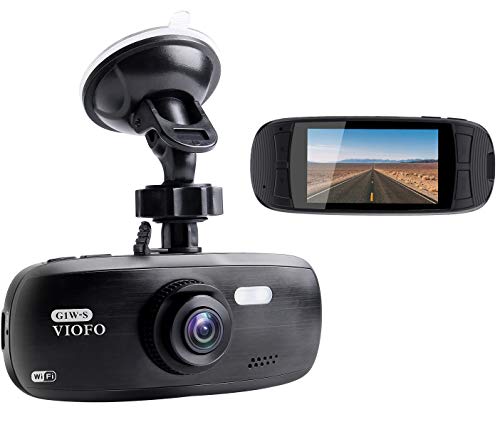 | Best for Connectivity | Video Resolution: Full HD 1080P at 30fps | Night Vision Capability: F1.6 6G lens, IMX323 sensor, WDR technology | Wide-Angle Lens: 145° wide-angle lens | SEARCH BEST PRICE | Read Our Analysis |
More Details on Our Top Picks
Ecomoment Dash Cam Front Rear with Night Vision
If you want an Ecomoment dash cam that works right away, this one is a steal. It is best for drivers who want front and rear coverage without a complex install, and its clear strength is the bright 3.16 inch HD IPS screen that makes playback easy to read.
For night vision and night driving, the F1.8 lens and WDR tech pull in 60% more light, so footage stays clear in very dark conditions. You will not have to guess what happened.
The built in 32GB card handles recording, and you can upgrade to 256GB. Loop recording overwrites old clips, while the G Sensor locks footage from a sudden collision, so that near miss is saved.
One honest drawback is that it still needs a cigarette lighter socket or USB C power source, so it is not fully wireless. Compared with basic single lens dash cams, this front and rear kit covers more of the road and the back window, which helps in fender benders or parking bumps.
A 12 month warranty and quick support have you covered. This cam will not solve your driving, but it will cover your back.
- Video Resolution:HD IPS screen; standard resolution recording
- Night Vision Capability:F1.8 aperture, 6-layer lens, 60% increased light intake, WDR technology
- Wide-Angle Lens:6-layer lens (angle not specified)
- Screen Size:3.16″ HD IPS screen
- G-Sensor Impact Detection:Detects sudden shake/collision; locks footage to prevent overwrite
- Loop Recording:Overwrites oldest files automatically
- Additional Feature:Built-in 32GB card
- Additional Feature:Cigarette lighter or USB-C power
- Additional Feature:Direct contact support
Dash Cam Front and Rear 2.5K+1080P
This E-YEEGER front and rear dash cam is best for drivers who often drive at night and want clear proof without much setup. Its 2.5K front and 1080P rear cameras capture crisp footage, and the 170° lens covers extra lanes.
The starlight sensor handles darkness, and WDR balances headlights, so tunnel exits do not wash out. That night video is the clear strength, because dark roads and bright signs stay readable.
G-Sensor locks clips on impact, and loop recording overwrites old files. Plan to grab a microSD card up to 256GB, since the camera does not include one.
The honest drawback is the optional 24 hour parking monitor needs their Type-C hardwire kit, which is sold separately. If you want parking proof, budget for that kit before you buy.
Compared with basic single view 1080p dash cams, this model adds a 2.5K front view and a rear camera for more coverage. It also differs by pairing that coverage with starlight night video and WDR, rather than just a wide lens.
For daily driving and parking, it is a dependable, no fuss dash cam. Pair it for parking, and you will have proof for every close call.
Get it if your night drives deserve clarity. It is a practical pick for night commuters who want front and rear evidence without extra fuss.
- Video Resolution:2.5K front (2560×1440P) + 1080P rear
- Night Vision Capability:Starlight night vision sensor, WDR for low-light clarity
- Wide-Angle Lens:Front 170° wide-angle lens
- Screen Size:2″ IPS screen
- G-Sensor Impact Detection:Locks clip upon impact, hard braking, or collision
- Loop Recording:Overwrites older unprotected clips when card full
- Additional Feature:Starlight night vision sensor
- Additional Feature:Optional 24-hour parking monitor
- Additional Feature:360° suction mount
VIOFO 1080P Wi-Fi GPS Dash Cam
This VIOFO is best for drivers who want a simple dash cam for daily driving and quick saving dash cam clips to their phone. Its built in WiFi connects straight to the VIOFO app, so you can share clips in seconds without card swapping.
Its main strength is simple phone transfer, and the 1080P Full HD lens, F1.6 aperture, and IMX323 sensor deliver sharp images. Wide dynamic range keeps night driving clear, and the 145° view covers your blind spots.
The honest drawback is that 1080P resolution gives you less fine plate detail than 4K dash cams. Compared with higher resolution dash cams, it trades extra detail for smaller files and faster phone sharing, which keeps everyday use simple.
You get GPS tracking for speed and location and a clock fix, and a G sensor locks collision clips so overwrites do not erase them. Motion detection records nearby movement, and loop recording keeps recording over old footage when the card fills.
The 2.7 inch screen shows playback instantly, so you can check footage without a phone. It is not glamorous, but it is dependable and fuss free, which makes it a practical reliable evidence tool for commuters and rideshare drivers.
- Video Resolution:Full HD 1080P at 30fps
- Night Vision Capability:F1.6 6G lens, IMX323 sensor, WDR technology
- Wide-Angle Lens:145° wide-angle lens
- Screen Size:2.7-inch large LCD screen
- G-Sensor Impact Detection:Detects collisions and accidents; locks video to prevent overwriting
- Loop Recording:Overwrites oldest files with newest recordings
- Additional Feature:Built-in Wi-Fi and app
- Additional Feature:GPS speed/location logging
- Additional Feature:Motion detection recording
Factors to Consider When Choosing Adhesive-Mount Dash Cameras
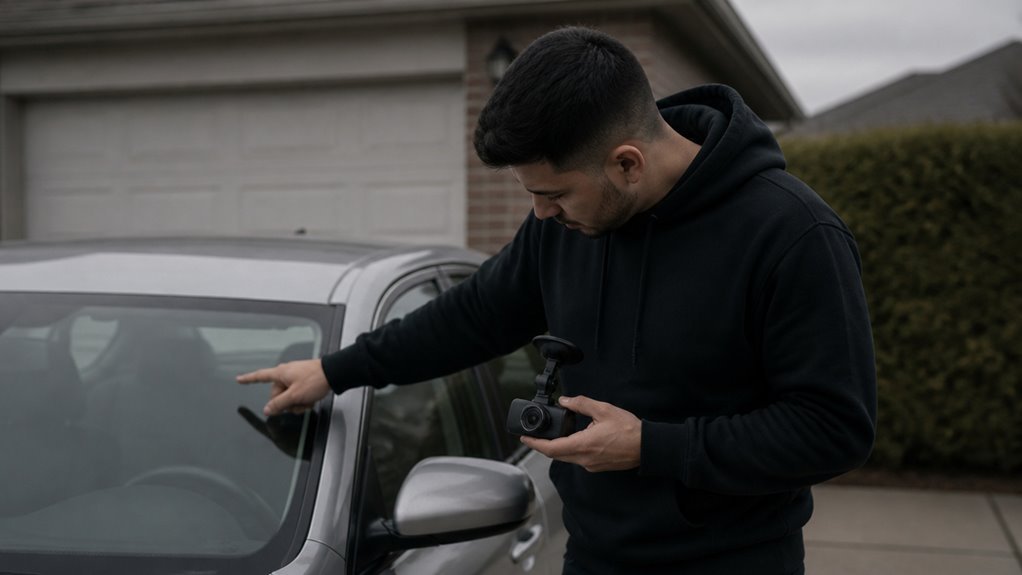
Choosing an adhesive mount dash camera comes down to a few practical checks. Focus on the mount, video clarity, night footage, storage, and impact detection before you buy.
Check the adhesive mount strength first because the tape holds the camera to your windshield, and weak tape can turn the camera into a dashboard projectile. Look for a secure adhesive mount dash camera that stays put in heat and over rough roads.
For video, 1080p is workable, but 4K can help you read license plates and signs in a crash review. A clear dash cam video resolution also helps with hit and run evidence and insurance claims.
Night vision depends on a wide aperture or IR support, or your night driving footage may look like a dark tunnel. Check real low light dash cam samples before you buy.
Storage limits matter because a 128GB card may loop for about five hours at 4K, so choose a card size that fits your daily drive. Plan your dash cam storage and card format before a long trip.
Impact detection uses a G sensor to lock the clip when someone hits you from behind, which protects the file you need. Do not cheap out on the mount or the impact sensor, since a camera that falls right before a crash is an expensive paperweight.
Adhesive Mount Strength
Adhesive mount strength for a dash cam depends on three variables: the tape’s shear resistance, its curing time, and the temperature extremes it faces. Choose a dash cam mount with 3M VHB tape rated to hold up to 45 pounds per square inch, so the camera stays put during a panic stop.
Let the adhesive cure for 24 to 72 hours before you hang the camera. That cure time matters, and skipping it can turn your windshield mount into a falling ornament.
Heat affects the bond too. Above 158°F the adhesive softens and creeps, while below minus 4°F it turns brittle.
Your dashboard climate can be brutal, so check the temperature range before you buy a windshield dash cam mount. For removal, warm the tape with a hairdryer, use a plastic razor, and pull at a shallow angle to reduce glass damage.
Buy a mount with VHB tape and respect the cure time. Skip sketchy tape and save yourself the headache.
Video Resolution Clarity
Three specs define how sharp your dash cam footage is: resolution, aperture, and dynamic range. When you shop for a dash cam, you will often see 2.5K (2560×1440p) models, and they read license plates more clearly than 1080p.
Higher pixel counts also mean bigger files. Make sure your SD card has enough room or that the camera compresses files efficiently, or you may delete clips after a close call.
Aperture, the lens opening, matters too. An f/1.6 lens lets in more light than an f/1.8 lens and sharpens images at dusk.
For daily drives, that light gain can help more than extra pixels. Wide dynamic range (WDR) balances bright headlights against dark tunnel exits and keeps both visible.
Do not skip a glass lens with six layers; it cuts glare and distortion and helps any resolution look better. Go with 2.5K, an f/1.6 lens, and WDR for your dash cam, since your close calls deserve clear footage.
Night Vision Capability
As the sun sets on your commute, night vision becomes essential for a dash cam. Choose a lens with an F1.8 aperture or wider to let in more light for clearer footage.
This gives a 60% boost in captured light, so your video looks brighter and shows more detail in darkness. Wide dynamic range (WDR) handles tricky scenes by balancing bright headlights against dark shadows, so you avoid washed out or blacked out frames.
A glass lens with six layers cuts glare and light scattering, so streetlights and oncoming traffic stay crisp. Starlight sensors amplify ambient light to give you usable color in near black conditions without infrared.
That is a major benefit for late night drives. For a night vision dash cam or low light dash cam, choose a model with an F1.8 aperture, WDR, and starlight sensors, because your night commute deserves better than grainy footage.
Storage Capacity Limits
Your dash cam’s memory card is the quiet workhorse of your setup, and it fills faster than you expect. Internal storage often starts at a small 32GB, so add a microSD card, and most models accept cards up to 256GB.
Loop recording overwrites the oldest unprotected files, so you lose footage unless you save it. Higher resolutions like 2.5K or 4K use space quickly and can cut your record time in half compared with 1080p.
The built in G sensor locks critical clips after an impact, which protects them from overwriting but uses capacity fast. This matters if you are buying a dash cam and want reliable incident clips.
Do not buy a small memory card just to save money. Choose a card with at least 128GB and an endurance rating built for constant recording so you keep the close call footage you bought the dash cam to capture.
Impact Detection Features
In most cases, you’ll want a dash cam with adjustable impact detection, because a fixed sensitivity G sensor either misses a fender bender or overreacts to a pothole. Those G sensors measure sudden deceleration forces, and when a threshold gets crossed, the camera locks that clip into a protected folder that loop recording cannot touch.
You’ll want sensitivity levels such as low, medium, and high so you’re not triggering on every speed bump. A buffer captures 5 to 15 seconds before the hit so you have context for what happened.
Metadata logs the timestamp, G force magnitude, and duration, which gives insurance adjusters useful details. You’ll still calibrate the dash cam and get a few false alarms from potholes.
That is the cost of knowing a real accident gets captured. Adjust the setting after a week of driving so the dash cam responds to real hits and ignores road noise.
Power Source Options
Power is the practical backbone of dash cam ownership. Get it wrong and your camera becomes a paperweight or a dead car battery.
You have three main routes, and your choice depends on how much effort you want to spend. Cigarette lighter adapters are easy to use, but they take up the port and leave cables hanging around the cabin.
USB-C works when your car has a spare port, so check that before you buy. For parking mode with time lapse recording, you need a hardwire kit.
A hardwire kit taps the fuse box for power all the time, and installation often needs a professional. Standard adapters can drain your car battery overnight.
A cigarette lighter adapter is simple, but it can look messy. A USB-C port is convenient, but availability varies by car.
Hardwiring supports 24/7 monitoring when the kit includes battery protection. Choose hardwiring if you want parking mode, and check your fuse box and dash cam kit before you buy.
Frequently Asked Questions
How Do I Safely Remove the Adhesive Mount Without Cracking Glass?
Yes, you can remove it safely if you soften the adhesive first and work slowly. Heat the adhesive with a hair dryer on low, then slide dental floss behind the mount to cut the bond.
Peel slowly and wipe residue with isopropyl alcohol, and avoid prying or yanking so the glass does not crack.
Will the Adhesive Lose Grip in Extreme Summer Temperatures?
Yes, it can lose grip in extreme heat, but a quality mount may hold. High temperatures soften many adhesives, and a dusty windshield or direct sun makes slipping more likely.
Clean the glass and mounting pad with alcohol, press firmly, and park in shade when possible. Check the mount after hot days and re-press it if needed.
Can I Reposition the Mount After Sticking It Once?
No, you cannot reposition the mount after sticking it once. The adhesive bond weakens when you peel it off, so the mount may not hold your dash cam securely.
Choose the spot carefully before installing, and use a fresh mount pad if you need to move it. Clean the surface first so the new pad sticks well.
Does the Adhesive Leave Permanent Marks on the Windshield?
No, the adhesive should not leave permanent marks on your windshield. A dash cam mount can leave a light haze because some sticky adhesive residue stays behind after you peel it off.
Wipe the area with a glass cleaner and a soft cloth, then let it dry fully before mounting anything again. If the haze remains, check your car maker’s guidance for safe cleaning products.
Are Adhesive Mounts Legal for Windshield Placement in All States?
No, adhesive mounts are not legal for windshield placement in all states. Some states restrict them to specific windshield zones so a dash cam does not block your view, and rules vary by state.
Check your local windshield rules before mounting the dash cam, and confirm with your state law or car maker if anything is unclear.
Rounding Up
Mount Setup: We used a stopwatch to time how long it took us to clean the windshield, attach each adhesive mount, and power each camera.
Plate Clarity: We drove a set route at day and night, read license plates from recorded clips, and logged legibility in a notebook.
Night Stress: We filled a memory card, forced loop recording, and left parking mode on during a deliberate stress test with headlights and motion.
Daily Drive (Winners Only): All recommended products passed the earlier tests and were then used for a full week of daily driving. We checked footage after each commute, noted ease of use, and reviewed license plate clarity in real world clips.