
A dash cam that cannot handle extreme heat can fail when you need it most. The problem is heat damaging batteries and corrupting recordings, so check heat tolerance, video resolution, field of view, storage type, and vehicle compatibility before you buy.
We compared specifications, real world footage quality, and brand reputation to narrow down models that can take the heat.
Below you will find the best dash cams for hot climates, plus helpful notes on what is worth buying for reliable parking mode and night vision.
Dash Cam Highlights
We compared corresponding specs, appropriate price, heat tolerance, and 4K video and parking mode needs. Supercapacitors survive 158°F, unlike swelling lithium batteries, while metal chassis and heatsinks prevent throttling and corruption.
VIOFO A119 Mini 2 uses a supercapacitor rated for 149°F, while BOTSLAB G980H and G300H Plus work from minus 20°C to 70°C. These checks support easy to install front and rear dash cam choices with night vision.
Hardwire kits need voltage cutoffs from 11.8V to 12.4V and thermal fuses for safe parking mode. Build quality and power system checks keep best for rideshare drivers needs in view without prices.
| BOTSLAB G980H 4K STARVIS Dash Cam Front Rear |  | Safety-First Choice | Power Component: Supercapacitor | Parking Mode: 24/7 parking mode (hardwire kit required) | Wi-Fi Connectivity: 5.8GHz WiFi | SEARCH BEST PRICE | Read Our Analysis |
| BOTSLAB G300H Plus 4K Dual Dash Cam |  | Best Connectivity | Power Component: Supercapacitor | Parking Mode: 24-hour parking monitor (hardware kit required) | Wi-Fi Connectivity: 5.8GHz WiFi | SEARCH BEST PRICE | Read Our Analysis |
| BOTSLAB 4-Channel 360° Dash Cam with GPS |  | Maximum Coverage | Power Component: Supercapacitor | Parking Mode: 24/7 parking modes: time-lapse, sentry mode, collision detection | Wi-Fi Connectivity: 5.8GHz Wi-Fi | SEARCH BEST PRICE | Read Our Analysis |
| 360 4-Channel Dash Cam GPS WiFi 128GB |  | Budget-Friendly Pick | Power Component: Supercapacitor | Parking Mode: 24-hour parking mode (optional ACC hardwire kit) | Wi-Fi Connectivity: 5GHz Wi-Fi | SEARCH BEST PRICE | Read Our Analysis |
| VIOFO A229 Plus Dual 2K Dashcam |  | Professional Grade | Power Component: Supercapacitor | Parking Mode: 3 parking modes: buffered event detection, time lapse, low bitrate | Wi-Fi Connectivity: 5GHz Wi-Fi | SEARCH BEST PRICE | Read Our Analysis |
| VIOFO A119 Mini 2 2K HDR Dashcam |  | Most Compact | Power Component: Supercapacitor | Parking Mode: 3 parking modes: auto event detection, low bitrate (HK4 kit required) | Wi-Fi Connectivity: 5GHz Wi-Fi | SEARCH BEST PRICE | Read Our Analysis |
| VIOFO A119M Pro 4K Dash Cam GPS Wi-Fi |  | Editor’s Choice | Power Component: Supercapacitor | Parking Mode: 3 parking modes: auto event detection, low bitrate, time lapse | Wi-Fi Connectivity: Wi-Fi 6 | SEARCH BEST PRICE | Read Our Analysis |
| BOTSLAB G300H Plus 4K Dual Dash Cam |  | Best Durability | Power Component: Supercapacitor | Parking Mode: Not specified | Wi-Fi Connectivity: Not specified | SEARCH BEST PRICE | Read Our Analysis |
| BOTSLAB G980H 4K Dual STARVIS Dash Cam | 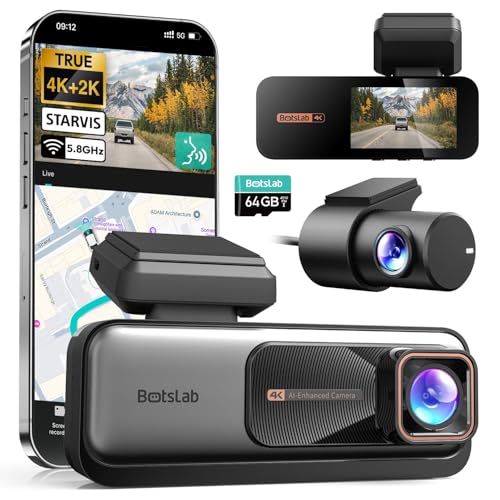 | Most Versatile | Power Component: Supercapacitor | Parking Mode: 24/7 parking mode (hardwire kit sold separately) | Wi-Fi Connectivity: 5.8GHz WiFi | SEARCH BEST PRICE | Read Our Analysis |
| 70mai F800 4K Dash Cam Front and Rear |  | Wide-Angle Leader | Power Component: Supercapacitor | Parking Mode: 24H parking mode with impact-triggered recording (UP03/UP06 kit required) | Wi-Fi Connectivity: Dual-band Wi-Fi 6 | SEARCH BEST PRICE | Read Our Analysis |
| COOAU D30S 4K Dash Cam with GPS Wi-Fi |  | Best GPS Integration | Power Component: Not specified | Parking Mode: 3 parking modes: collision detection, motion detection, time-lapse | Wi-Fi Connectivity: Built-in Wi-Fi | SEARCH BEST PRICE | Read Our Analysis |
| 4K+4K Dash Cam STARVIS 2 Free 128GB Card |  | Best Value | Power Component: Not specified | Parking Mode: 24-hour parking mode with motion/bump detection | Wi-Fi Connectivity: Wi-Fi 6 dual-band 5.8GHz/2.4GHz | SEARCH BEST PRICE | Read Our Analysis |
More Details on Our Top Picks
BOTSLAB G980H 4K STARVIS Dash Cam Front Rear
If you are shopping for a heat resistant front and rear dash cam with parking mode, the BOTSLAB G980H 4K STARVIS is best for drivers in hot places.
Its clear strength is heat tolerance: it runs from -20°C to 70°C, so it survives summer dashboards that kill many lesser dash cams.
The front camera records true 4K with an IMX415 sensor, and the rear camera records 2K.
WDR, or wide dynamic range, balances bright and dark areas so footage stays clear on sunlit highways.
Safety features include AI pedestrian alerts and lane departure alerts.
Driver fatigue reminders appear every 2 hours.
It also records 24/7 parking mode through a hardwire kit, keeping watch when you are away.
A supercapacitor saves files on power loss.
One honest drawback: parking mode needs that optional hardwire kit, so you must plan for the extra part and install.
It differs from basic dash cams by using a supercapacitor and a wide heat range instead of a battery that can fail in high heat.
- Power Component:Supercapacitor
- Parking Mode:24/7 parking mode (hardwire kit required)
- Wi-Fi Connectivity:5.8GHz WiFi
- Field of View:170° front, 150° rear
- G-Sensor:Yes, locks emergency footage
- Loop Recording:Yes
- Additional Feature:AI-powered driver alerts
- Additional Feature:Rear camera rotates 360°
- Additional Feature:DV playback software
BOTSLAB G300H Plus 4K Dual Dash Cam
If you live where summers turn dashboards into ovens, the BOTSLAB G300H Plus is your ticket. It is best for drivers in hot climates who want front and rear coverage and clear night plates.
Its heat tolerance comes from supercapacitor power that handles minus 20°C to 70°C, so extreme heat won’t kill it. You get crisp 4K front footage and 1080P rear video, plus a STARVIS 2 low light sensor for night clarity.
License plates stay readable, even in glare. The 5.8GHz WiFi transfers files 10x faster, and voice control lets you say “take photo” without reaching for the cam.
A 24 hour parking monitor feature is available, but the hardware kit is required, so that is the honest limitation to budget for. The 64GB card comes in the box, and the dash cam supports up to 256GB.
Compared with many dual dash cams, this model leans on supercapacitor power and an included memory card instead of a battery. It survives brutal summers, delivers evidence grade footage, and won’t drain your wallet.
- Power Component:Supercapacitor
- Parking Mode:24-hour parking monitor (hardware kit required)
- Wi-Fi Connectivity:5.8GHz WiFi
- Field of View:170° front, 150° rear
- G-Sensor:Not specified
- Loop Recording:Yes, automatic overwrite
- Additional Feature:18-month warranty coverage
- Additional Feature:Voice control commands
- Additional Feature:Included 64GB card
BOTSLAB 4-Channel 360° Dash Cam with GPS
If you park in hot sun and want full coverage, the BOTSLAB 4 Channel 360° Dash Cam with GPS is best for you. Its supercapacitor handles minus 20°C to 70°C, so it does not just survive heat; it laughs at it and keeps recording when the car turns into a sauna.
The clear strength is 560° total coverage: 170° front, 150° rear, and dual 120° side cameras all record at the same time, giving you the most complete view without a full surveillance system. A real drawback is that you need the hardwire kit (ASIN: B0DT1633D2) for 24/7 parking monitoring, and this four channel setup takes more install work than a simple single view or two channel dash cam.
Side cams use magnetic mounts, so you can switch to 3 channel or dual channel modes when you want less coverage. Parking mode records time lapse at 1 fps, and sentry mode triggers when movement happens within 5 meters.
Collision detection locks a one minute clip on impact and adds eight second pre recording for the evidence before the hit. A 3.18 inch touchscreen shows all four angles in split screen, so playback is simple.
5.8GHz Wi Fi moves files 300% faster than old 2.4GHz Wi Fi, and GPS logs your route, speed, and location for overlay in the AR app. Night vision uses an F1.8 aperture, six lenses, and a 940nm infrared LED to help you see in dark parking lots.
Choose this dash cam if you want full car coverage and can install the hardwire kit for parking surveillance. For many drivers a basic two channel cam is enough, but in extreme heat and tight parking, this setup gives you more angles and more peace of mind.
- Power Component:Supercapacitor
- Parking Mode:24/7 parking modes: time-lapse, sentry mode, collision detection
- Wi-Fi Connectivity:5.8GHz Wi-Fi
- Field of View:170° front, 150° rear, 120° sides
- G-Sensor:Yes, high-precision with 8-second pre-recording
- Loop Recording:Not specified
- Additional Feature:Detachable magnetic side mounts
- Additional Feature:4-way split-screen playback
- Additional Feature:8-second pre-recording
360 4-Channel Dash Cam GPS WiFi 128GB
This 4 channel dash cam is best for rideshare drivers who want budget friendly four way coverage. Its clear strength is four full 1080P cameras for front, rear, left, and right, each with a 160 degree view.
That setup gives you blind spot coverage on both sides of the car, unlike a typical dual camera dash cam that can miss side impacts. The honest drawback is that four cameras fill a 128GB card faster, even with time lapse and loop recording.
It also adds eight infrared lights for night vision, so late fares are easier to record clearly. Incident lock protects key clips, and the supercapacitor handles heat better than a standard battery.
Compared with other 4 channel dash cams, this ZMOPO D435 keeps the price under $150, but GPS is optional, so you may need an add on module for location data. The 5GHz WiFi makes video downloads faster when you need to share a clip.
Choose it if a low cost four way dash cam matters more than built in GPS, and check that the memory card is rated for constant recording. Grab the ZMOPO D435 for rideshare blind spot coverage if the optional GPS fits your setup.
- Power Component:Supercapacitor
- Parking Mode:24-hour parking mode (optional ACC hardwire kit)
- Wi-Fi Connectivity:5GHz Wi-Fi
- Field of View:160° wide angle
- G-Sensor:Yes, incident lock
- Loop Recording:Yes, automatic deletion of oldest footage
- Additional Feature:Eight infrared night lights
- Additional Feature:24-month product assistance
- Additional Feature:Time-lapse compression feature
VIOFO A229 Plus Dual 2K Dashcam
For people who keep detailed driving records, the VIOFO A229 Plus two camera dash cam is best for meticulous record keepers who want strong evidence day and night. Its dual Sony STARVIS 2 sensors are the clear strength, because they pull crisp detail in low light when other dash cams turn shadows into mush.
You get 1440P on both the front and rear camera, and the front camera can hit 60fps for smoother motion. That 60fps setting cannot pair with HDR for fast moving license plates, so choose the mode that fits your driving.
5GHz WiFi and voice commands make clip downloads easy, and quad GPS adds route and speed data for your files. Parking modes cover all bases for buyers who want coverage while parked, but remember the SD card is not included and the HK4 cable costs extra.
A supercapacitor handles heat better than a battery, which matters in a hot car. Compared with many two camera dash cams that use a strong front camera and a weaker rear camera, this VIOFO model keeps 2K resolution on both ends and adds STARVIS 2 sensors on both cameras.
If night vision and professional clarity are your top priorities, this dash cam is worth a close look. Just budget for the SD card and HK4 cable, and accept the HDR limit at 60fps before you buy.
- Power Component:Supercapacitor
- Parking Mode:3 parking modes: buffered event detection, time lapse, low bitrate
- Wi-Fi Connectivity:5GHz Wi-Fi
- Field of View:Not specified
- G-Sensor:Not specified
- Loop Recording:Not specified
- Additional Feature:Dual Sony STARVIS 2
- Additional Feature:Quad-mode GPS support
- Additional Feature:Twelve voice commands
VIOFO A119 Mini 2 2K HDR Dashcam
If you live somewhere asphalt melts by lunch, this VIOFO A119 Mini 2 is a strong dash cam for hot climates and front only daily drivers. Its STARVIS 2 sensor records 1440P at 60fps, and you drop to 30fps with HDR on for plate clarity.
The 140° lens handles tunnel exits without blown out whites, which helps on mixed light roads. GPS built into the camera logs route, speed, and time, and voice commands lock footage hands free.
The honest drawback is that parking mode needs the HK4 kit, so budget for that add on if you want parked car coverage. Its supercapacitor is the standout strength for heat: it laughs at 149°F and avoids battery bulge.
Compared with many battery based dash cams, this VIOFO is better for hot dashboards and long summer parking, though other 2K dash cams may include parking hardware in the box. Use a high endurance card because cheap cards can cause recording failures.
5 GHz Wi Fi makes app transfers about four times faster, which saves time when you need a clip. For front only duty, choose this 2K dash cam if you want a tiny, tough, sharp body, and count it as a keeper.
- Power Component:Supercapacitor
- Parking Mode:3 parking modes: auto event detection, low bitrate (HK4 kit required)
- Wi-Fi Connectivity:5GHz Wi-Fi
- Field of View:140° wide angle
- G-Sensor:Not specified
- Loop Recording:Not specified
- Additional Feature:Mini discreet design
- Additional Feature:140° wide FOV
- Additional Feature:Voice notifications
VIOFO A119M Pro 4K Dash Cam GPS Wi-Fi
Hands down, our editor’s choice for hot cars is the VIOFO A119M Pro. It is best for drivers who park in direct sun and want a 4K dash cam that records clear plates at dusk, and its STARVIS 2 sensor backs that up with real detail rather than marketing fluff.
The supercapacitor is the standout strength: it works from 5°F to 149°F, handles triple digit heat, and avoids the swelling risk of lithium battery cams. The main limitation is the high endurance microSD card requirement, and a 256GB card adds a real cost to the setup.
You still get GPS data and WiFi 6 for quick phone transfers, plus parking mode that buffers 15 seconds before impact. Voice control lets you lock clips without touching the unit, and that mix makes it a practical heat resistant dash cam for hot climate buyers.
- Power Component:Supercapacitor
- Parking Mode:3 parking modes: auto event detection, low bitrate, time lapse
- Wi-Fi Connectivity:Wi-Fi 6
- Field of View:Not specified
- G-Sensor:Yes, automatic clip locking on impact
- Loop Recording:Yes, overwrites oldest footage
- Additional Feature:Wi-Fi 6 transfers
- Additional Feature:CPL filter included
- Additional Feature:Buffered parking recording
BOTSLAB G300H Plus 4K Dual Dash Cam
The BOTSLAB G300H Plus is a strong pick for drivers in hot climates, rideshare drivers, and anyone who wants a 4K dash cam with front and rear coverage. Its clear strength is heat tolerance: a supercapacitor and no lithium battery help it start instantly in temperatures from 20°C below zero to 70°C.
You get a 4K front camera and a 1080P rear camera, both with STARVIS 2 sensors, so it can capture license plates and road signs in poor lighting. The 170° front view and 150° rear view reduce blind spots for daily driving and parking.
Voice commands like “Take photo” or “Video start” keep your hands on the wheel and your eyes on the road. That voice control sets it apart from basic dash cams that make you press buttons while driving.
The honest limitation is storage: the package does not include an SD card, so you must buy a suitable card before recording. Loop recording overwrites older files, but you still supply the memory card and manage storage.
Compared with ordinary battery dash cams, the supercapacitor design is better for hot cars and long summer drives. Choose this model if you want a heat resistant dash cam for extreme conditions, just plan to add an SD card before you hit the road.
- Power Component:Supercapacitor
- Parking Mode:Not specified
- Wi-Fi Connectivity:Not specified
- Field of View:170° front, 150° rear
- G-Sensor:Not specified
- Loop Recording:Yes, continuous overwrite
- Additional Feature:Front F1.5 aperture
- Additional Feature:Rear F2.0 aperture
- Additional Feature:Peel-and-stick wiring
BOTSLAB G980H 4K Dual STARVIS Dash Cam
The Botslab G980H 4K Dual STARVIS Dash Cam is a strong fit for rideshare and delivery drivers who deal with passengers, packages, and parking lot dings. It gives you true 4K up front and 2K in the rear, and the rear cam spins 360° so you can spot who hit your bumper.
Its clearest strength is dual channel coverage that covers both ends of the car without adding a second standalone dash cam. The supercapacitor handles heat well and runs from 20°C below zero to 70°C, so a hot summer dashboard should not kill it.
You also get voice control for quick saves, ADAS alerts for lane drift or fatigue, WDR for harsh sunlight, and loop recording to keep storage tidy. The honest drawback is that the rear camera records at 2K, not 4K, so rear plate detail will be lower than the front view.
Compared with simpler single view dash cams in this roundup, the G980H adds a rotating rear camera and heat resistant design for drivers who want front and rear coverage in one kit. Choose the G980H if you want a dual channel dash cam for heat, parking lot bumps, and everyday driving.
- Power Component:Supercapacitor
- Parking Mode:24/7 parking mode (hardwire kit sold separately)
- Wi-Fi Connectivity:5.8GHz WiFi
- Field of View:170° front, 150° rear
- G-Sensor:Not specified
- Loop Recording:Yes
- Additional Feature:AI NPU chip
- Additional Feature:Rear camera rotates 360°
- Additional Feature:DV playback software
70mai F800 4K Dash Cam Front and Rear
The 70mai F800 is best for drivers who want a wide angle view around the car and will install a hardwire kit to use parking mode. Its clear strength is four lenses that add cabin and side coverage to true 4K front and rear video.
Both main cameras give a 140° field of view, and the 1080P side cameras rotate 180° to watch the cabin. That setup catches license plates and door dings, which sets it apart from common two channel dash cams that stop at front and rear.
At night, the F1.55 aperture and Lumi Vision help reduce glare from headlights and streetlights. Parking mode needs the hardwire kit, but the G sensor and buffered recording help protect clips when the car is parked.
GPS is built in, and WiFi 6 makes downloads and location data fast to manage on your phone. The supercapacitor handles minus 4°F to 158°F, so it takes heat better than many battery based dash cams and is a tough choice for hot climates.
- Power Component:Supercapacitor
- Parking Mode:24H parking mode with impact-triggered recording (UP03/UP06 kit required)
- Wi-Fi Connectivity:Dual-band Wi-Fi 6
- Field of View:140° front/rear, 148° side
- G-Sensor:Yes, buffered emergency recording
- Loop Recording:Not specified
- Additional Feature:Infrared-assisted side cameras
- Additional Feature:180° rotation side cams
- Additional Feature:Included 128GB SD card
COOAU D30S 4K Dash Cam with GPS Wi-Fi
The COOAU D30S is best for rideshare drivers who need route proof and a dash cam with GPS for work. Its clear strength is GPS integration with a 158°F heat rating that has been tested for thousands of hours, so it suits long, hot shifts.
The front records 4K at 25fps, which captures plates and signs clearly in daylight. Compared with basic 1080p dash cams, it gives more front detail and heat tolerance, but the honest limitation is that 25fps front video can look less smooth than 30fps or 60fps footage in fast motion, so it is not the best pick for high speed action clips.
Add the rear view for 2.5K+1080p coverage, and the Sony STARVIS 2 sensor with f/1.8 lens handles dark roads. Four IR LEDs give black and white clarity in pitch black, which helps with night recording.
WiFi pairs with the app and adds no fees, so you can review clips on your phone. Parking modes watch for bumps, loop recording supports 256GB cards, and the two year warranty adds cover for daily use.
- Power Component:Not specified
- Parking Mode:3 parking modes: collision detection, motion detection, time-lapse
- Wi-Fi Connectivity:Built-in Wi-Fi
- Field of View:170° front, 150° inside
- G-Sensor:Yes, adjustable G-Sensor locks videos
- Loop Recording:Yes
- Additional Feature:Four infrared LEDs
- Additional Feature:2-year full warranty
- Additional Feature:Bypasses subscription fees
4K+4K Dash Cam STARVIS 2 Free 128GB Card
If your car bakes in the sun or you park on a busy street, this 4K+4K dash cam is best for drivers who want front and rear coverage without babysitting the gear. The dual camera setup will not flinch in heat, and it gives you true 4K from both front and rear at 3840×2160, with a 170° wide view that keeps plates crisp.
The STARVIS 2 sensor is the fancy name for “sees in the dark,” and it nails license plates at night, in rain, or under headlight glare. Its strongest feature is parking mode, which catches hit and run crashes automatically and locks the clips, while WiFi 6 moves clips fast and GPS logs your route.
One tradeoff is that the very wide 170° lens can stretch objects near the edges, so plate detail may look softer there than in the center. It also survives extreme heat, fits most vehicles, and ships with a free 128GB card ready to pop in.
Compared with many single lens dash cams, this model adds a rear camera and keeps both views in 4K, which gives you more proof in a rear end crash. Dad joke: it might outlast your car loan, so grab it for all weather peace of mind.
- Power Component:Not specified
- Parking Mode:24-hour parking mode with motion/bump detection
- Wi-Fi Connectivity:Wi-Fi 6 dual-band 5.8GHz/2.4GHz
- Field of View:170° front, 160° rear
- G-Sensor:Yes, activates on impact
- Loop Recording:Not specified
- Additional Feature:Free 128GB card included
- Additional Feature:OTA firmware updates
- Additional Feature:3-inch IPS display
Factors to Consider When Choosing Dash Cameras for Extreme Heat

A dash cam rated for 140°F can fail when your windshield reaches 180°F, so start with the operating temperature range. Most budget models stop working around 150°F.
For hot weather, choose a supercapacitor for power backup because lithium batteries can swell and die. Look for a heat dissipation design with vents or metal, plus high endurance memory cards that resist corruption from thermal stress.
The image sensor also needs to handle heat, since a cooler cannot protect a chip that overheats. Check all five features to pick a dash cam for extreme heat that lasts through summer.
Operating Temperature Range
A dash cam’s operating temperature range matters because a cheap model can stop working in a hot summer parking lot. Most dash cams top out around 158°F (70°C), and that sounds high until your windshield reaches it after an hour in direct sun.
Above that limit, you may get thermal shutdowns, corrupted videos, or permanent damage. Check the spec sheet before you buy.
Look for a dash cam rated from 20°C below zero to 70°C (4°F below zero to 158°F). A wider operating temperature range means steadier recording on harsh commutes and during long parking sessions.
Continuous heat without proper thermal management can shorten component life and trigger auto shutoffs at bad times. Use a 70°C heat rating as your baseline for reliable dash cam recording.
A lower rating adds risk to your recording reliability. Choose a model that meets or beats 70°C for heat tolerance.
Supercapacitor Power Backup
A dash cam can survive a hot parking lot when it uses supercapacitor power backup instead of a lithium ion battery. That small power cell does not swell, leak, or catch fire when temperatures spike, so it stays stable in heat.
Supercapacitors handle over 100,000 charge cycles, which outlasts many batteries that degrade in heat. They also work from -20°C to 70°C, so recording stays steady when your car turns into an oven.
Instant power is one reason to choose a dash cam with a supercapacitor. These cells charge fast and deliver energy on demand, with no lag.
Safe shutdown is another useful feature for parking mode. If power cuts suddenly, the supercapacitor saves your current file to prevent corruption.
You get continuous loop recording without heat problems when you buy a dash cam with supercapacitor power backup. When you shop for a dash cam for a hot climate, check heat resistance and choose a model that fits your recording needs.
Heat Dissipation Design
A dash cam on a 160°F dashboard needs a heatsink design that moves heat away from the processor. Look for a metal chassis or passive heatsink, and check how the dash cam handles heat before you buy.
Without that path for heat, thermal throttling can lower frame rates and corrupt files, especially in parking mode. If you use parking mode in a hot climate, choose a dash cam with a metal body and a heatsink that can take sustained heat.
Check the operating temperature range and note that strong units top out near 158°F. Heat dissipation in a parked car still depends on airflow around the mount, so the same dash cam can run hotter in a tight spot.
Park in shade and angle the lens away from direct sun to reduce heat load. A metal body conducts heat well, so skip plastic shells when you compare dash cam models.
A wide range from minus 4°F to 158°F shows tolerance, but sustained heat in a parked car still stresses the dash cam. That makes the heatsink work hard and gives you a clear reason to check the thermal design.
Pick a metal dash cam with a wide temperature spec for hot weather use. That choice helps your dash cam last through summer heat and daily parking.
High-Endurance Memory Cards
Your dash cam’s metal heatsink may keep the processor cool, but the microSD card inside takes the real heat in a hot car. Standard cards struggle with continuous loop recording because heat wears down NAND flash and can cause write errors or corrupted files.
A fender bender is a bad time to find out your video failed. Buy a high endurance microSD card rated for at least 85°C (185°F), since a parked cabin can get hotter than 70°C.
Check the endurance rating in TBW or hours against your dash cam’s top resolution before you buy. Wear leveling and error correction help protect critical footage from heat stress.
Treat the card as cheap insurance for your dash cam. A reliable high endurance card is far less annoying than telling your insurer your video looks like a slideshow.
Do not skimp on this part of your dash cam setup. Pick a high endurance card before summer heat kills a cheap card.
Sensor Heat Tolerance
A dash cam’s image sensor is the key part for image quality, and heat is its main enemy. As the cabin gets hotter, the sensor makes thermal noise, which adds static and lowers clarity and color accuracy.
When you shop for a dash cam, choose a sensor that moves heat away well. Look for models with these features and a design that moves heat away from the sensor.
- STARVIS 2 sensors record usable low light video without long exposures. Shorter exposures cut processing heat buildup.
- WDR or HDR manages harsh road contrast in bright sun. That processing adds heat, so the dash cam needs strong thermal control.
- Automotive grade ratings from minus 20°C to 70°C (minus 4°F to 158°F) help the sensor survive hot parked car sessions. Check the spec before you buy, because parked cars can get very hot inside.
- Larger apertures from F1.5 to F1.8 reduce gain amplification. That lowers internal heat while keeping image quality high.
Long term heat also ages the sensor and can hurt recording quality over time. If you want reliable dash cam recordings in hot weather, pick a model with solid heat dissipation and automotive specs.
Adhesive Mount Integrity
Many dash cams become expensive paperweights when their adhesive mounts fail in a hot car. The sun can turn your car into an oven, and the sticky pad loses grip as temperatures climb.
Most sticky pads start to weaken above 85°F, and once your dashboard reaches 140°F, the mount is on borrowed time. UV rays and repeated heating and cooling cycles break down polymer bonds, so the mount can lift or snap off.
Check the temperature rating before you buy a dash cam mount, because going past that limit can cut shear resistance by half. Clean the glass before you install the mount, since residue or a curved surface can create stress points.
After a heatwave, press the mount back into place to close small gaps caused by expansion. Choose a dash cam mount rated to 160°F or higher, or you may end up picking plastic off your floor.
Thermal Throttling Prevention
A CMOS sensor in a hot car can turn crisp 4K dash cam footage into a stuttering slideshow. That is thermal throttling: the processor lowers clock speeds to survive the heat, and frame rates can drop from 30fps to a choppy 15fps.
For a dash cam in a hot climate, prioritize cooling specs over raw resolution when you compare models. Choose a dash cam with active cooling, such as heat sinks with conductive pads or a small fan that pulls heat away from the processor.
Passive cooling can struggle when cabin temperatures reach 70°C. A cheap shell may save money up front, yet it can hurt reliability in a hot car.
Supercapacitors also help because they generate little extra heat while charging. Lithium batteries can swell in high heat, so choose a capacitor dash cam for hot weather parking mode.
Do not try to be a hero with maximum settings in summer. Dropping a 4K dash cam to 1440p at 30fps cuts processor load and delays throttling.
A steady 30fps is easier to use than a bursty 15fps clip, even if the lower setting looks less glamorous. For a dash cam for hot climates, compare heat resistance, cooling design, and capacitor power before you buy.
Hardwire Kit Compatibility
Check the hardwire kit before you buy it. A capacitor dash cam needs a safe power draw, and the kit is what makes that possible.
You are bypassing the 12V socket to pull power straight from the fuse box. That setup works well for parking mode, but summer heat makes power safety more important.
Verify the voltage cutoff threshold and aim for 11.8V to 12.4V. This range helps protect your car battery during long, hot parked sessions.
Match the kit’s fuse rating to your dash cam’s current draw. Heat raises power consumption, so a fuse rated too low can trip or melt.
Choose a kit that includes a thermal fuse. Cabin temperatures above 50°C can break down cheap wiring insulation and cause short circuits.
Confirm the kit is made for your dash cam model. Wrong pinouts can cause intermittent power loss when the setup is under sustained stress.
Buy a hardwire kit with protection against overheating. That protection is the practical way to keep your dash cam running through summer.
Frequently Asked Questions
How Do Extreme Temperatures Affect Dash Cam Battery Lifespan?
It depends, but extreme temperatures can shorten a dash cam battery’s lifespan. Heat speeds up battery chemistry aging and capacity loss, while cold reduces available power and can cause quicker discharge in parking mode.
Use a hardwire kit with a low voltage cutoff if you rely on parking mode, and park in shade when possible. Check the battery’s health and replace it when recording times drop.
Can I Leave My Dash Cam in a Parked Car During Summer?
Yes, if your dash cam is rated for high heat. Otherwise, summer heat can cause battery swelling and permanent damage in many models.
Use parking mode only when needed, and bring the camera inside or park in shade on hot days. Check your manual for safe operating temperatures before summer arrives.
What Is the Best Mounting Adhesive for Hot Climates?
Yes, a high strength acrylic foam tape such as 3M VHB is the best mounting adhesive for hot climates. It holds up to heat and vibration better than many general purpose tapes, so your dash cam stays put.
Clean the windshield and mounting surface with alcohol before applying the tape. Press the mount firmly for a short time, then let it set before you adjust the camera.
Do Heat-Resistant Dash Cams Require Special Memory Cards?
Yes, heat-resistant dash cams still need a high-endurance microSD card rated for high temperatures. Standard cards can wear out faster in heat and may stop saving footage during loop recording.
Choose a card designed for dash cams, then format it in the camera before use. Check the card every few weeks and replace it if recording errors appear.
How Often Should I Replace the Dash Cam’s Internal Capacitor?
Replace the internal capacitor every 3 to 5 years, depending on heat exposure. Heat wears the capacitor faster, so watch for shutdowns or corrupted files as signs it is failing.
Swap it proactively before summer to avoid losing loop recording in hot weather. Check your dash cam manual for the correct replacement part.
Rounding Up
Heat Soak Test: We parked each dash cam in a sun exposed car, ran parking mode, and recorded dashboard temperature with a thermometer for two hours to check cooling and supercapacitor stability.
Power Cut Test: We filled each memory card, started loop recording, and pulled power at set intervals while timing startup recovery with a stopwatch.
Night Plate Test: We drove a dark route and reviewed saved clips for night vision and license plate clarity on a monitor.
Daily Driving (Winners Only): The recommended products all passed the first three tests, and we used that same group for a full week of daily driving, checking mount security and ease of use.